QUICK OVERVIEW
Key Takeaways
- Select minibar technology according to acoustic, cooling, energy and ambient-condition requirements rather than purchase price alone.
- Treat the minibar and surrounding joinery as one installation system, with ventilation, clearances and socket position approved together.
- Compare usable internal capacity, door configuration and room-type requirements before finalising quantities.
- Evaluate energy consumption using comparable supplier data and documented test conditions.
- Approve the minibar in a representative mock-up room before bulk procurement whenever furniture integration or performance is critical.
Why Hotel Minibar Specification Starts with the Operating Model
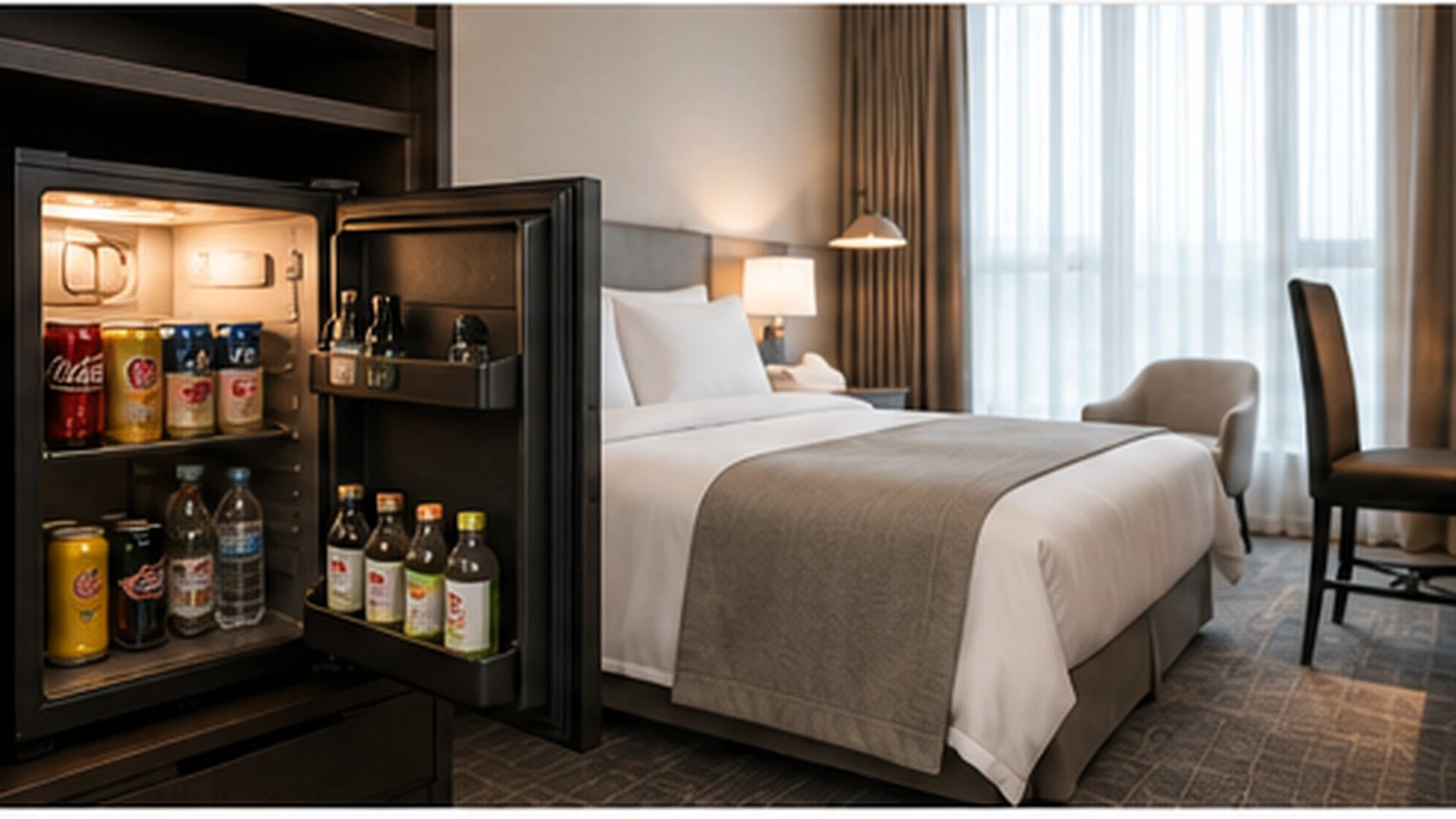
A hotel minibar is a small appliance with a disproportionate number of project interfaces. It sits inside or beside furniture, operates continuously, affects acoustic comfort, consumes energy in every occupied and unoccupied room, requires routine cleaning, and may need to be replaced without disturbing the surrounding joinery. For that reason, selecting a minibar only by litre capacity or purchase price is rarely enough for a professional hotel project.
The right starting point is the operating model of the property. A city business hotel, resort, serviced residence, luxury property and limited-service hotel may all expect different things from the minibar. Some properties require strong cooling performance and frequent restocking. Others prioritise very low acoustic impact, low energy use, simple housekeeping access or a compact footprint inside fixed furniture. The equipment specification needs to translate those operational priorities into measurable product requirements.
Before comparing models, clarify how the minibar will actually be used. Will it be stocked with beverages, used mainly as a guest refrigerator, incorporated into a welcome station or placed inside a tightly dimensioned cabinet? Will the room remain air-conditioned continuously, or can ambient temperatures rise during unoccupied periods? Is the minibar positioned close to the bed? Does the hotel require a glass door for product visibility, or a solid door for a quieter visual appearance? These questions determine which technical characteristics matter most.
This guide explains how to compare hotel minibars across cooling technology, capacity, ventilation, door configuration, energy performance, acoustics, housekeeping, installation and procurement. The objective is not to recommend one cooling system for every property, but to help project teams specify the system that best matches the room design and operational requirement.
Define the Minibar Requirement Before Comparing Models
A procurement team can only compare quotations properly when every supplier is responding to the same requirement. If one proposal assumes a freestanding minibar, another assumes built-in installation and a third includes additional ventilation parts, a simple price comparison becomes misleading.
Create a short minibar design brief before requesting final quotations. It should define the room types involved, approximate quantity, intended installation location, cabinet dimensions if known, required cooling range, expected ambient conditions, door preference, electrical supply and any acoustic or energy priorities.
The brief should also state whether the minibar must be reversible, whether interior lighting is required, whether shelves need to be adjustable, and how the hotel expects housekeeping to access and clean the unit. If the project has multiple room types, identify which requirements are common and which vary by room type.
- room types and quantities;
- intended minibar location in each room type;
- freestanding or built-in installation;
- available cabinet opening and ventilation strategy;
- target usable capacity rather than nominal litres alone;
- solid or glass door preference;
- door handing or reversible-door requirement;
- cooling performance expected under project conditions;
- acoustic expectations, particularly when the unit is close to the bed;
- energy-consumption criteria and how suppliers must report them;
- interior shelf, lighting and storage requirements;
- housekeeping, cleaning and replacement access;
- electrical supply, plug type and cable route;
- sample-room and technical approval procedure.
Understand the Three Main Cooling Technologies
Hotel minibars are commonly offered with absorption, thermoelectric—often referred to as Peltier—and compressor-based cooling systems. Each technology has a different operating character. The correct choice depends on the balance between acoustic comfort, cooling demand, energy use, ambient conditions, cabinet design, maintenance strategy and budget.
The technology name should never be treated as a complete performance specification. Two products using the same cooling principle can differ significantly in cabinet insulation, heat-exchanger design, ventilation requirement, thermostat control, energy consumption and actual cooling performance. Supplier data for the exact model remains essential.
Absorption Minibars
Absorption systems create cooling through a heat-driven refrigeration cycle rather than a mechanical compressor. One of their main advantages in hotel applications is the absence of a conventional compressor mechanism. This makes them attractive where acoustic comfort is a major concern, particularly when the minibar is positioned close to the bed.
Their installation, however, requires careful heat management. The cooling process needs to reject heat to the surrounding environment, so cabinet ventilation and air circulation are important. Restricting warm-air escape can reduce cooling performance and may increase operating temperatures around the appliance.
Absorption models are often selected for guest rooms where quiet operation is prioritised and the expected cooling load is moderate. Project teams still need to verify the manufacturer’s declared operating conditions, cooling range, ambient-temperature limitations and energy consumption for the exact product.
When absorption equipment is integrated into furniture, the joinery drawing should show the ventilation route clearly. Do not assume that a decorative grille automatically provides adequate airflow; the free ventilation area, intake position and warm-air discharge path need to reflect the supplier’s installation instructions.
Thermoelectric / Peltier Minibars
Thermoelectric systems use a Peltier module to move heat from one side of the system to the other. They have a compact cooling principle and do not use a conventional refrigerant compressor. Depending on the design, fans may still be used to move air across heat sinks or within the cabinet, so the complete acoustic behaviour depends on the model rather than the Peltier principle alone.
Thermoelectric cooling performance is closely connected to the temperature difference between the room and the desired cabinet temperature. For this reason, ambient conditions matter. A unit that performs adequately in a controlled guest room may have less cooling margin in a hotter environment or inside poorly ventilated furniture.
Peltier models can suit projects that value compact construction and relatively simple mechanical design. Their energy performance should be compared carefully against other technologies using supplier-declared consumption under equivalent test conditions. A low purchase price or small footprint should not replace a proper operating-cost comparison.
Compressor and Inverter Compressor Minibars
Compressor systems use a vapour-compression refrigeration cycle similar in principle to conventional refrigerators. They generally provide strong cooling performance and can be well suited to projects that need faster temperature recovery, lower cabinet temperatures or more resilience to variable ambient conditions.
Traditional compressor units may produce audible operating cycles because the compressor and associated components start and stop. Modern designs can reduce this effect through improved mounting, insulation and control. Inverter compressor systems can further modulate compressor operation instead of relying only on full on/off cycling, although the actual acoustic and energy result still depends on the complete product design.
For projects where energy efficiency is a primary concern, compressor technology is often worth serious evaluation. The decision should be made from the declared consumption and operating data of the actual models under consideration, not from technology labels alone.
Built-in compressor minibars also require ventilation. Strong cooling performance does not eliminate the need to remove condenser heat from the furniture cavity. Joinery coordination remains part of the specification.
Cooling Technology Comparison for Hotel Projects
The following comparison is a project-level guide rather than a substitute for model-specific technical data. Individual products may perform differently, and final selection should be based on supplier documentation, mock-up testing where appropriate and the actual installation condition.
| Decision factor | Absorption | Thermoelectric / Peltier | Compressor / Inverter Compressor |
|---|---|---|---|
| Acoustic character | Often selected for very low mechanical noise because there is no conventional compressor. | No conventional compressor, but fan noise may be present depending on design. | Can produce compressor or fan noise; modern and inverter designs may reduce perceived cycling. |
| Cooling strength | Suitable for many hotel-room applications when correctly installed and operated within specified ambient conditions. | Typically more dependent on ambient temperature and heat rejection conditions. | Generally strong cooling capability and recovery performance. |
| Ventilation sensitivity | High importance in built-in furniture; warm air must escape effectively. | High importance because heat-sink performance depends on airflow. | Important for condenser heat rejection, especially in enclosed joinery. |
| Energy evaluation | Compare exact declared model consumption; do not assume technology alone determines efficiency. | Compare exact consumption and operating conditions carefully. | Often competitive where energy efficiency and stronger cooling are required; verify model data. |
| Maintenance concept | No conventional compressor mechanism; project teams should still plan ventilation and service access. | Relatively simple cooling module, but fans and electronics may still require service. | Contains compressor and refrigeration components; service access and replacement strategy remain important. |
| Best-fit discussion | Quiet-room priority with suitable installation and cooling expectations. | Compact applications with controlled ambient conditions and verified performance. | Projects prioritising cooling strength, temperature recovery or energy efficiency. |
Capacity: Nominal Litres Are Only the Starting Point
A minibar described as 30, 40 or 45 litres is not automatically suitable simply because the nominal capacity matches the project schedule. What matters to hotel operations is the usable internal volume and how that volume is organised.
Shelf spacing, door storage, compressor or cooling-module intrusion, internal lighting and cabinet geometry all affect what can actually be stored. Two products with similar declared capacity can hold noticeably different beverage combinations.
Before approving a model, define the expected stock. If the hotel intends to place specific bottle sizes, cans, snack items or guest-provided medicine and food inside the unit, check these against the actual interior dimensions. A physical sample is particularly useful because it allows the operations team to load the planned minibar assortment and confirm that the internal layout is practical.
Avoid oversizing by default. A larger cabinet consumes more room within the furniture package and may increase cooling demand. The better approach is to choose the smallest unit that comfortably supports the hotel’s operational requirement while maintaining reasonable circulation around stored items.
For serviced residences or longer-stay rooms, the minibar may function more like a compact refrigerator than a traditional stocked minibar. In those cases, usable shelf arrangement, bottle height, door storage and guest flexibility may matter more than maximising the number of chargeable minibar items.
Built-In Installation and Ventilation
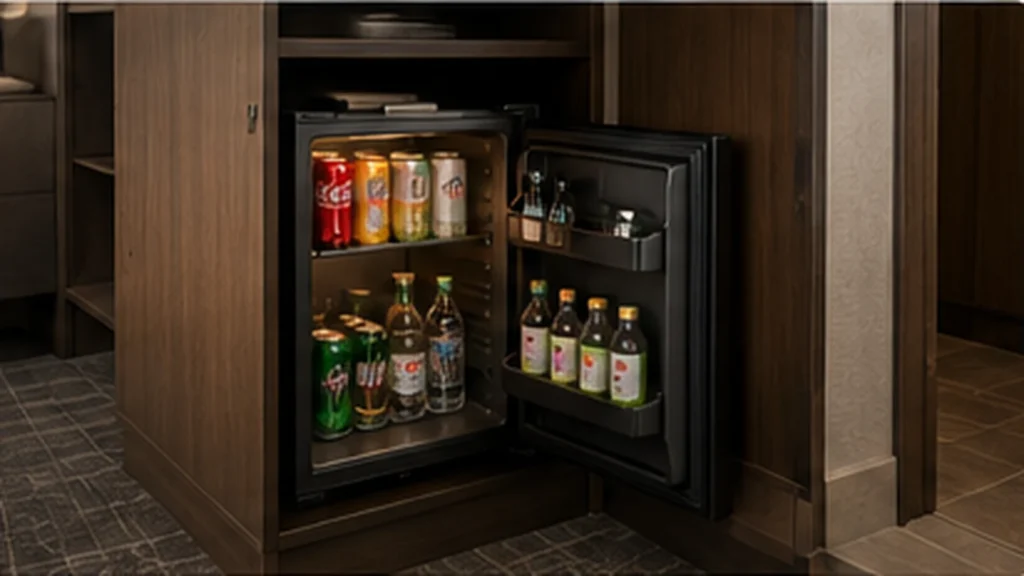
Poor ventilation is one of the most common reasons a technically suitable minibar performs badly after installation. A minibar removes heat from its internal compartment and releases that heat to the room. When the unit is placed inside joinery, the furniture becomes part of the thermal system.
The installation needs a path for cooler room air to enter and warmer air to leave. The exact arrangement depends on the model. Some projects use ventilation openings at the plinth and upper cabinet area; others use side, rear or top clearances defined by the manufacturer. What matters is that airflow is not blocked by decorative panels, luggage, stored items or later furniture modifications.
The cabinet opening should also allow the minibar door to open fully without hitting hinges, decorative fronts or adjacent furniture. If the minibar has a reversible door, the project team should decide the final handing before sample-room approval rather than leaving the decision to site installation.
Check the electrical socket position at the same time. The plug must remain accessible for maintenance but should not force the minibar forward or reduce the required rear clearance. Loose cables should not sit against hot components or become trapped behind the appliance.
Solid Door or Glass Door?
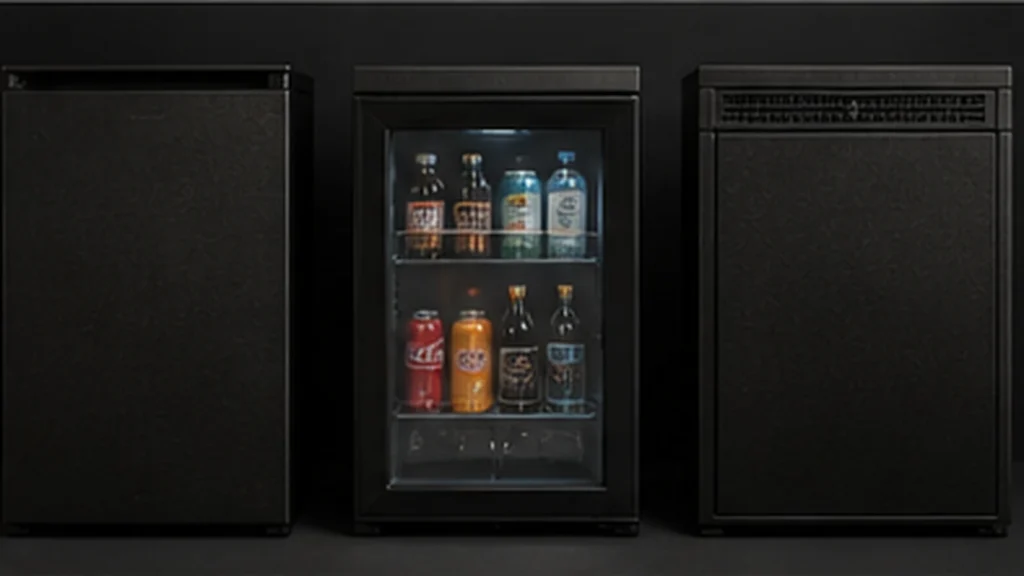
Door choice affects more than appearance. A glass-door minibar gives guests immediate visibility of the contents and can support merchandising or a premium beverage presentation. A solid door creates a more discreet appearance and may integrate more quietly into a guest room concept.
Thermal performance can differ between solid and glass-door versions depending on insulation, glazing construction and product design. Do not assume that two versions with the same external dimensions have identical energy consumption or cooling behaviour. Compare the technical sheets for the exact variants.
Glass also changes housekeeping requirements. Fingerprints, water marks and internal product presentation are more visible, so cleaning frequency and restocking discipline become part of the guest-facing experience. If the hotel expects a consistently curated minibar display, operations should be involved in the decision.
For solid-door units hidden inside joinery, check whether a furniture door is also used in front of the appliance. Double-door arrangements can affect airflow and opening geometry. The manufacturer’s installation guidance should be reviewed before approving this configuration.
Door Handing, Reversible Doors and Furniture Clearances
Door direction is easy to overlook during procurement and difficult to ignore after installation. The minibar door must open in a direction that gives the guest clear access without colliding with the furniture door, wall, desk, luggage bench or adjacent cabinet.
A reversible door can simplify standardisation across mirrored room layouts, but the project should still define how the door will be configured in each room type. Do not assume that site teams will make the same choice consistently without a room matrix or installation note.
Check hinge projection and handle clearance, not only the nominal door width. Some doors require additional lateral space as they swing. Where the minibar sits low in a cabinet, confirm that the guest can see and access the interior without awkward movement.
Noise and Acoustic Comfort
Noise is one of the most important minibar criteria because the appliance may operate continuously in the same room where guests sleep. A technical specification should therefore distinguish between the cooling technology and the actual acoustic performance of the complete model.
Absorption systems are often selected where mechanical silence is a priority, but other sounds can still result from cabinet movement, thermal expansion, electrical components or the furniture installation itself. Thermoelectric products may include fans. Compressor units may cycle or modulate. The perceived result depends on sound level, frequency, duration, mounting and the room’s background noise.
If acoustic performance is critical, request the supplier’s declared noise data and test a sample in a representative room. A minibar that seems quiet in a busy showroom can be more noticeable at night in a low-background-noise guest room.
Placement matters as well. A unit directly beside the bed creates a different acoustic condition from one located near the entrance or behind an acoustically considered furniture panel. Equipment selection and room planning should be reviewed together.
Energy Consumption and Total Operating Cost
A minibar runs for long periods and is multiplied by the number of guestrooms. Small differences in consumption can therefore become significant across the property life cycle. Energy evaluation should be part of procurement, but it must be based on comparable data.
Ask suppliers to state energy consumption using a clear unit and test basis, such as kWh per 24 hours or kWh per year where applicable. If products are tested under different ambient temperatures, cabinet settings or standards, the figures may not be directly comparable.
Energy labels and efficiency classes can vary by market, regulation and product category. Rather than relying only on a letter grade, record the actual declared consumption, test condition and model reference in the procurement comparison.
Total operating cost also includes the effect of ventilation, maintenance, expected service life, spare-unit strategy and replacement access. A product with lower purchase cost but poor energy performance or difficult service access may not be the lower-cost solution over the project life.
When evaluating large quantities, calculate consumption at the property level. Use the supplier’s declared figures as the basis, apply the same operating assumptions to every model and document the method. The purpose is not to predict an exact utility bill but to make competing options comparable.
Ambient Temperature, Climate Conditions and Cooling Expectations
Minibar performance is influenced by the temperature of the room and the heat surrounding the appliance. A unit installed in a consistently air-conditioned guest room has a different operating environment from one in a resort where rooms may be unconditioned between stays.
Ask the supplier for the permitted ambient-temperature range and any climate-class information applicable to the model. Confirm how the declared internal temperature range was measured. If the project requires a specific product temperature under unusually warm conditions, this should be stated explicitly rather than assumed.
Built-in furniture can create a warmer micro-environment around the appliance than the general room temperature. This is another reason ventilation needs to be evaluated together with ambient conditions.
For projects in hot climates or properties with energy-management systems that allow room temperatures to rise while unoccupied, sample testing under representative conditions can be more informative than relying solely on nominal room-temperature data.
Interior Layout, Shelves and Guest Usability
Interior design should support both guest use and hotel restocking. Adjustable shelves can make the minibar more flexible, but the hotel should define the intended standard arrangement so housekeeping can reset every room consistently.
Check whether shelves can support the planned bottle sizes without unstable stacking. Confirm that tall bottles can stand upright where required and that the door can close without interference. If the hotel stocks glass bottles, shelf strength and retention should be reviewed from a practical handling perspective.
Interior lighting improves visibility, especially when the minibar is installed low or inside dark joinery. Sensor-activated lighting can be convenient, but the project should still verify how the light operates, whether it remains on with the door open and whether replacement or service is straightforward.
The internal liner and shelf materials should be easy to wipe and resistant to routine hotel cleaning methods. Corners, drain areas and removable components should not create unnecessary housekeeping time.
Housekeeping, Cleaning and Daily Operation
A minibar specification should be tested against the daily housekeeping sequence. Staff may need to inspect stock, replace beverages, remove expired items, wipe shelves, check the door seal and confirm that the unit is operating correctly.
If the minibar is difficult to pull forward, has inaccessible surfaces or requires furniture removal for basic cleaning, that difficulty will be repeated across hundreds or thousands of service cycles. Accessibility is therefore an operating-cost issue as well as a maintenance issue.
Define how minibar faults will be identified. Some hotels use housekeeping inspection, some rely on engineering checks and others monitor guest complaints. Whatever the system, staff should be able to isolate power, remove the unit and install a replacement without damaging joinery.
Where stocked minibars are part of the revenue model, the physical equipment should also support accurate presentation and count control. The layout needs to remain consistent enough that missing items are visible during room servicing.
Electrical Supply, Controls, Defrost and Lighting
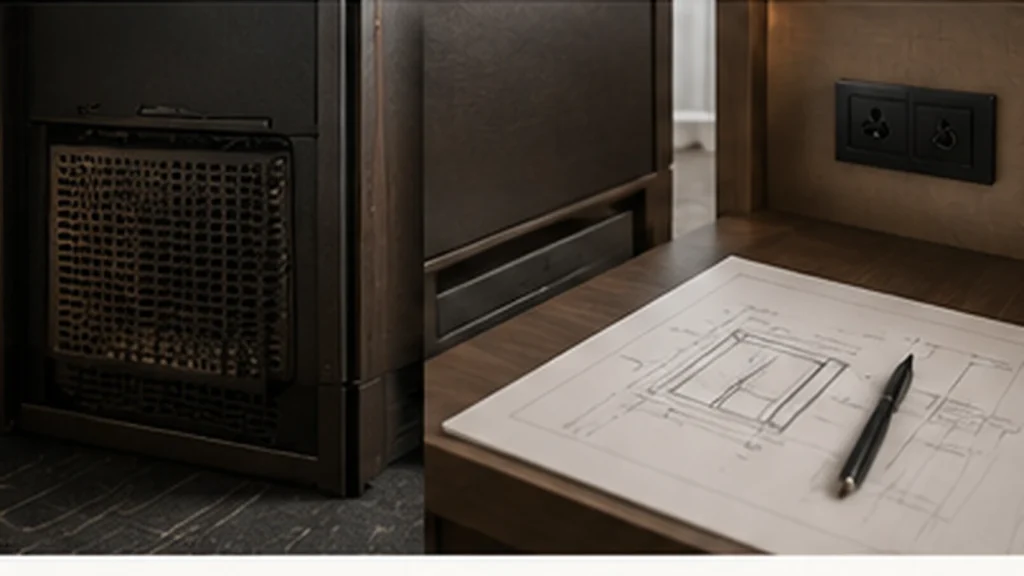
Confirm voltage, frequency, plug type and power-cable length for the destination market before order approval. Electrical requirements should match the room’s final MEP specification and procurement destination.
The socket should be positioned so the minibar can be disconnected without dismantling furniture. Avoid locations where the plug prevents the unit from sitting at the designed depth or where the cable can be crushed.
Thermostat design varies by model. Some hotel projects prefer simple preset operation to minimise guest adjustment; others allow a defined range. Record the control strategy in the specification, particularly if the hotel requires a consistent cabinet temperature across rooms.
Automatic defrost can reduce operational intervention on products where frost management is relevant. The project team should understand how defrost is handled and whether any drainage or cleaning requirement exists.
Interior lighting, door switches, timers or other electronic functions should be treated as maintainable components. Ask how they are serviced and whether a failed light or control can be replaced without replacing the complete minibar.
Maintenance, Serviceability and Replacement Access
Hotel rooms need equipment that can be maintained with minimal disruption. A minibar hidden inside expensive joinery should not require destructive access for routine replacement.
Check whether the unit can slide out once the furniture, skirting and door hardware are complete. Confirm that cables, ventilation grilles and decorative panels do not lock the appliance permanently into place.
For larger projects, consider spare units. A small quantity of identical or compatible replacement minibars can reduce room downtime if a unit fails. The spare strategy is more effective when the project standardises models and avoids unnecessary variation between room types.
Ask suppliers about service support, replacement components and the expected availability of key parts. Procurement should record the exact model designation and configuration so that future replacements do not rely on photographs or informal descriptions.
Standardise Where Possible, Document Exceptions Where Necessary
Standardisation simplifies procurement, housekeeping, engineering and replacement planning. If the same minibar model can serve standard rooms, twin rooms and suites without compromising the design, the hotel benefits from simpler training and spare stock.
However, standardisation should not override legitimate differences. A suite may need greater usable capacity; an accessible room may require a different installation height; mirrored furniture may require opposite door handing; a residence unit may need a more refrigerator-like interior.
Use a room-type matrix to document these exceptions. Every room type should show minibar model, quantity, door configuration, installation location and any project-specific note.
The matrix also helps prevent a common procurement error: ordering the correct total quantity but the wrong distribution of variants.
How to Compare Supplier Quotations Properly
A professional minibar comparison sheet should separate commercial price from technical compliance. The lowest unit price is not meaningful if the quotation excludes required accessories, uses a different door type, assumes another cooling technology or does not meet the cabinet dimensions.
For each offer, record the exact model and technical configuration. Ask suppliers to identify deviations from the specification rather than allowing alternatives to remain hidden inside descriptive text.
At minimum, compare:
- cooling technology and exact model;
- nominal and usable capacity information;
- external dimensions and installation clearances;
- declared cooling range and ambient operating conditions;
- door type and door handing;
- reversible-door capability where required;
- ventilation requirements;
- declared noise information where available;
- energy consumption and test basis;
- interior shelf arrangement and lighting;
- defrost and thermostat functions;
- electrical data and plug configuration;
- warranty terms;
- service and spare-parts support;
- delivery lead time;
- packaging and project-labelling requirements;
- commercial inclusions and exclusions.
Project teams can review the OTELSAN product catalogue alongside the project specification when comparing available minibar and guest room equipment options.
Mock-Up Room and Sample Approval
A minibar sample should be reviewed inside the actual or representative furniture whenever possible. This is where many issues become visible: restricted door movement, insufficient ventilation, plug interference, excessive projection, poor access to controls or a mismatch between the interior layout and the hotel’s beverage assortment.
The mock-up should be reviewed by more than the design team. Procurement, operations, housekeeping and engineering each see different risks. A technically correct minibar can still be awkward to restock; an attractive glass-door model can still create extra cleaning work; a quiet unit can still overheat if the cabinet design is wrong.
Record the approved model, finish, door configuration, shelf arrangement and installation detail after the mock-up. Photographs are useful, but they should support—not replace—the written approval record.
Common Hotel Minibar Specification Mistakes
Choosing by litre capacity alone. Nominal capacity does not show shelf usability, bottle fit, cooling performance or furniture compatibility.
Ignoring ventilation until furniture installation. A minibar cannot reject heat effectively when the cabinet has no functioning airflow path.
Assuming every cooling technology performs the same in every climate. Ambient temperature and installation conditions affect performance.
Comparing energy figures without checking test conditions. Numbers reported on different bases can create a false comparison.
Leaving door handing to the installer. Mirrored rooms and furniture constraints need a documented door-direction plan.
Approving a glass door only for appearance. Cleaning, internal presentation and thermal data should also be considered.
Placing the socket behind the appliance without clearance. This can prevent the minibar from reaching the designed cabinet depth and make maintenance difficult.
Specifying the minibar separately from the joinery. Appliance, cabinet and ventilation form one installation system.
Ignoring housekeeping access. A unit that is difficult to inspect or clean creates repeated operational inefficiency.
Ordering before the room-type matrix is stable. This increases the risk of incorrect quantities, door configurations or cabinet compatibility.
Practical Pre-Order Hotel Minibar Checklist
Before releasing a minibar purchase order, confirm the following for each room type and model:
- Exact minibar model and cooling technology.
- Room types and quantity allocation.
- Nominal capacity and verified usable internal layout.
- External dimensions.
- Required installation clearances.
- Built-in or freestanding installation condition.
- Approved ventilation intake and warm-air discharge path.
- Permitted ambient-temperature range.
- Declared cooling range under stated conditions.
- Door type: solid or glass.
- Door handing and reversible-door requirement.
- Full door-opening clearance inside the furniture.
- Interior shelf arrangement and bottle fit.
- Interior lighting requirement.
- Thermostat or temperature-control strategy.
- Automatic defrost or frost-management method where relevant.
- Declared noise information where applicable.
- Energy consumption and test basis.
- Voltage, frequency, plug type and cable length.
- Socket location and maintenance access.
- Housekeeping cleaning and restocking access.
- Ability to remove the unit without damaging joinery.
- Warranty and service arrangements.
- Spare-unit or replacement strategy.
- Sample-room approval status.
- Approved drawings and installation notes.
- Packaging and project-labelling requirements.
- Final quantity, delivery destination and delivery sequence.
The checklist should be adapted to the hotel’s own technical standards, destination-market requirements and operating model. Supplier documentation for the approved model remains the controlling source for installation and performance data.
Frequently Asked Questions
Which hotel minibar cooling system is best?
There is no single best technology for every hotel. Absorption systems are often considered where very low mechanical noise is a priority, thermoelectric systems can suit compact controlled applications, and compressor or inverter-compressor models can be attractive where stronger cooling or energy efficiency is required. The final decision should compare exact products under the project’s ambient, acoustic and installation conditions.
Are absorption minibars completely silent?
Absorption systems do not use a conventional compressor, which is why they are widely associated with quiet hotel-room operation. However, the complete installed product can still produce minor sounds from electrical components, thermal expansion or surrounding furniture. If acoustic performance is critical, review the exact model and its installed condition.
Do compressor minibars make too much noise for hotel rooms?
Not necessarily. Compressor products vary considerably in acoustic performance, and modern designs can reduce vibration and cycling noise. The right question is whether the declared and observed noise of the exact model is acceptable in the intended room location. A sample-room test is more useful than a general assumption about the technology.
How much minibar capacity does a hotel room need?
Capacity should be derived from the actual stock or guest-use requirement. Define the planned bottle and can sizes, snack items and expected guest storage, then check the interior layout of the proposed model. Nominal litres alone do not show how efficiently the space can be used.
Can a hotel minibar be installed inside a closed cabinet?
Only when the installation follows the ventilation and clearance requirements of the approved model. The minibar needs to reject heat, so an enclosed furniture cavity without adequate airflow can reduce performance. The cabinet design should be coordinated with the manufacturer’s installation instructions.
Is a glass-door minibar better than a solid-door minibar?
Neither is universally better. Glass doors improve content visibility and can support a merchandising concept, while solid doors create a more discreet appearance. Compare energy data, insulation, cleaning requirements, guest presentation and the overall room design before deciding.
What energy information should a hotel request from minibar suppliers?
Request the declared energy consumption together with the unit of measurement and test basis. Where energy labels or efficiency classes apply, record those as supporting information rather than relying on them alone. Competing products should be compared using equivalent operating assumptions.
Why does minibar ventilation matter so much?
Cooling equipment transfers heat from inside the cabinet to the surrounding environment. If that heat cannot escape from the furniture cavity, the air around the minibar becomes warmer and cooling performance can deteriorate. Ventilation is therefore part of the minibar installation, not a decorative afterthought.
Should minibar door direction be specified before ordering?
Yes. Door direction affects guest access and furniture compatibility. Reversible-door models can provide flexibility, but the final handing should still be documented by room type so installation is consistent.
What should be tested in the hotel mock-up room?
Check physical fit, door opening, ventilation, socket position, noise, cooling behaviour, shelf arrangement, bottle fit, lighting, housekeeping access and the ability to remove the minibar for maintenance. The mock-up should reproduce the intended furniture condition as closely as possible.
Conclusion: Select the Minibar as Part of the Guest Room System
A hotel minibar should be selected as part of the room, not as an isolated appliance. Cooling technology matters, but so do ventilation, furniture dimensions, door movement, acoustic expectations, energy use, housekeeping access and replacement planning.
Start with the operating requirement, compare technologies using the same technical criteria and confirm the selected model inside representative joinery before bulk procurement. A clear room-type matrix and controlled approval record will reduce installation problems and make long-term hotel operations easier.
Project teams can review the Guestroom product groups and the complete Guestroom product range when coordinating minibar requirements with the wider room equipment package. Once the project scope and quantities are defined, teams can build a project quote list for project-based evaluation.
For multi-room hotel projects, renovation programmes or minibar specifications requiring project coordination, contact the OTELSAN project team with room types, quantities, destination, cabinet information and the required technical criteria.