QUICK OVERVIEW
Key Takeaways
- 1. Select the coffee system together with the hotel's consumable and replenishment strategy.
- 2. Compare warm-up time, cup clearance, water capacity and waste handling under real room use.
- 3. Coordinate the machine, kettle and tray so the beverage station remains usable rather than overcrowded.
- 4. Include cleaning, descaling and capsule disposal in the housekeeping operating standard.
- 5. Test the complete beverage station in the mock-up room with real cups, water and consumables.
Why Hotel Coffee Machine Needs Project-Level Specification
Hotel Coffee Machine may be a relatively small part of the room budget, but it is repeated across many guestrooms and handled continuously by guests and hotel staff. Small specification errors therefore scale quickly across the property.
A professional selection process should connect product quality with the room around it. Furniture dimensions, wall construction, electrical points, circulation, cleaning procedures and replacement strategy can all influence whether the item performs well after opening.
The correct solution should support the intended guest experience without increasing housekeeping or engineering work unnecessarily. This is why project teams should evaluate the installed and operated condition rather than relying on catalogue appearance.
This guide is written for hotel developers, designers, procurement teams, project managers and operators who need a repeatable method for technical comparison, mock-up approval and long-term operational control.
Define the Requirement Before Requesting Final Quotations
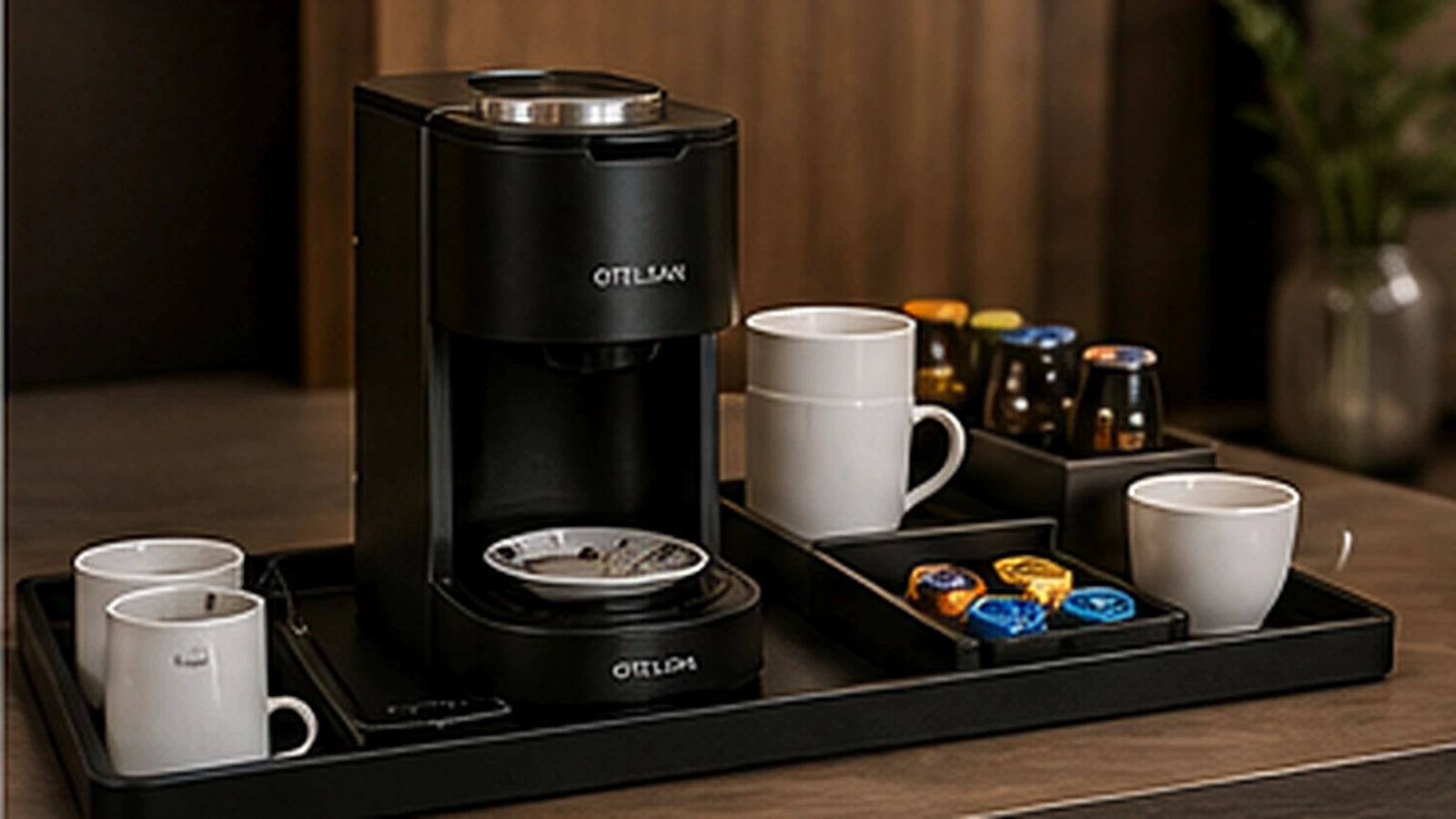
A professional hotel coffee machine guide covering capsule and pod systems, water tanks, power, controls, cleaning, consumables, tray integration and housekeeping.
Begin with the room-type schedule and identify where the equipment will be used, how many units are required, who interacts with it and what interfaces must be coordinated. The brief should be detailed enough that competing suppliers are pricing the same functional requirement.
Separate essential requirements from preferences. Essential requirements control fit, safety, function and hotel operations; preferences cover finish, styling or optional features that can be evaluated after technical compliance.
- Exact machine
- Room types
- Quantity
- Capsule/pod/ground system
- Compatible consumables
- Water tank capacity
- Tank removal
- Warm-up time
- Brew time
- Cup sizes
- Cup clearance
- Drip tray
- Waste capsule container
- Controls
Once the baseline is issued, suppliers should be asked to identify any departure from it. This makes alternatives transparent and prevents a quotation from appearing cheaper because a required element was omitted.
Capsule, Pod and Ground-Coffee Systems
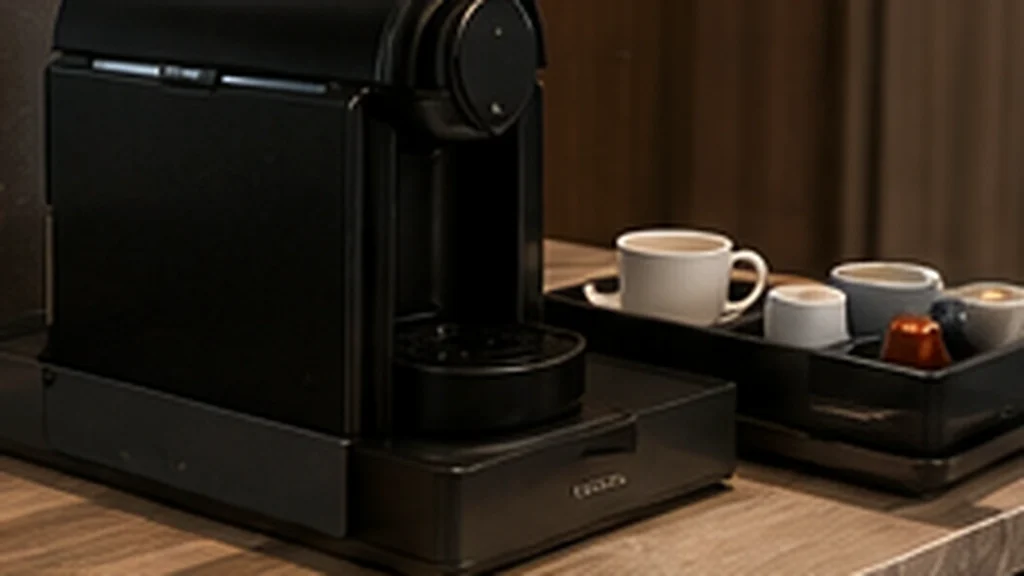
Single-serve capsule and pod systems are common in guestrooms because they simplify portioning and guest use. Ground-coffee systems can provide more flexibility but usually require more cleaning and dosing control.
Choose the system together with the property’s procurement and consumable supply strategy. Machine price alone does not represent lifecycle cost.
The hotel should confirm long-term availability of compatible coffee products in the destination market.
From a design perspective, the product should be reviewed with the neighbouring furniture, finishes and guest touchpoints rather than against a blank background. Small dimensional or visual conflicts become much more obvious once the full room composition is present.
When alternatives are offered, ask the supplier to identify the deviation clearly. Differences in size, mechanism, finish, power, accessories or warranty should not be left hidden inside descriptive text.
Engineering should also confirm that normal service or replacement can be completed without damaging finished furniture or wall surfaces. Replacement access is part of long-term project quality.
The specification should therefore define both the product and the condition in which the hotel expects it to operate.
Water Tank Capacity and Filling
Cleaning and Descaling
Tank size should support the intended number of beverages without consuming unnecessary space.
Check how the tank is removed or filled, especially when the machine sits under a shelf or inside a niche.
Housekeeping should be able to refill and clean the tank without moving other station items.
The room drawing should show the item in its real operating position, not only its storage position. Door movement, user reach, clear floor area and adjacent accessories can change the practical result even when the nominal dimensions appear correct.
Price should be compared only after confirming that the commercial scope is equivalent. Packaging, mounting parts, holders, power supplies or project-specific accessories can materially change the real delivered cost.
Record the final position and configuration with photographs and dimensions. This turns the approved sample into a practical site reference rather than a one-time meeting decision.
A common failure mode is to approve the product technically while leaving the room interface unresolved. The result is then corrected on site through drilling, spacers, extension leads, relocated accessories or inconsistent installer decisions.
Warm-Up Time and Beverage Speed
Guests expect an in-room coffee machine to be quick and intuitive.
Compare warm-up and brew sequence using the actual cup and beverage format. Very long start-up procedures reduce convenience.
Automatic standby can reduce unnecessary energy use between sessions.
Premium hospitality design depends on restraint and consistency. This feature should support the room concept without becoming visually dominant unless the design intentionally makes it a focal element.
Where a large quantity is involved, consistency between production batches matters. The approval record should define the visual and functional reference that later deliveries are expected to match.
In the mock-up room, reproduce the action a guest will perform rather than merely looking at the product. Move it, open it, load it, plug it in or return it to storage as appropriate to the item.
Another risk is over-specification: adding features that sound premium but are rarely used, difficult to maintain or unsupported by the hotel’s operating model. Every feature should have a clear guest or operational purpose.
Cup Clearance and Drip Tray
Espresso cups and larger mugs require different vertical clearance.
Adjustable or removable drip trays can improve flexibility, but loose components need a clear housekeeping reset position.
Check drip-tray capacity and how easily it can be removed without spilling.
The correct solution should still look resolved after the guest has used it. Consider the product both in the pristine housekeeping reset position and in the normal working condition during a stay.
For procurement, require the exact model, dimensions, material or electrical data where relevant, included accessories and finish to be stated on the quotation. A generic family name is not enough for final comparison.
Ask housekeeping to repeat the service movement after the guest-use test. If a reset requires awkward lifting, several loose components or access behind other furniture, that burden will be repeated every day after opening.
Under-specification can be equally expensive. Missing a small mounting, clearance, storage or consumable detail can create repeated labour and inconsistent rooms even when the main product is good.
Controls and Guest Instructions
One-touch controls are usually easier for guestrooms than complex menu systems.
Buttons, icons and status lights should be understandable without a long instruction card.
If special instructions are required, keep them concise and integrate them with the room’s guest information system.
From a design perspective, the product should be reviewed with the neighbouring furniture, finishes and guest touchpoints rather than against a blank background. Small dimensional or visual conflicts become much more obvious once the full room composition is present.
When alternatives are offered, ask the supplier to identify the deviation clearly. Differences in size, mechanism, finish, power, accessories or warranty should not be left hidden inside descriptive text.
Engineering should also confirm that normal service or replacement can be completed without damaging finished furniture or wall surfaces. Replacement access is part of long-term project quality.
The specification should therefore define both the product and the condition in which the hotel expects it to operate.
Electrical Load and Outlet Planning
Coffee machines can be relatively high-power appliances during heating.
Coordinate them with kettles, minibars and other beverage-station equipment on the room electrical plan.
The outlet should remain accessible while avoiding visible cable clutter.
The room drawing should show the item in its real operating position, not only its storage position. Door movement, user reach, clear floor area and adjacent accessories can change the practical result even when the nominal dimensions appear correct.
Price should be compared only after confirming that the commercial scope is equivalent. Packaging, mounting parts, holders, power supplies or project-specific accessories can materially change the real delivered cost.
Record the final position and configuration with photographs and dimensions. This turns the approved sample into a practical site reference rather than a one-time meeting decision.
A common failure mode is to approve the product technically while leaving the room interface unresolved. The result is then corrected on site through drilling, spacers, extension leads, relocated accessories or inconsistent installer decisions.
Used Capsule and Waste Handling
Capsule machines create spent capsules and occasional coffee drips.
Define whether used capsules drop into an internal container or must be removed manually after each drink.
Housekeeping should be able to empty the waste path cleanly and quickly.
Premium hospitality design depends on restraint and consistency. This feature should support the room concept without becoming visually dominant unless the design intentionally makes it a focal element.
Where a large quantity is involved, consistency between production batches matters. The approval record should define the visual and functional reference that later deliveries are expected to match.
In the mock-up room, reproduce the action a guest will perform rather than merely looking at the product. Move it, open it, load it, plug it in or return it to storage as appropriate to the item.
Another risk is over-specification: adding features that sound premium but are rarely used, difficult to maintain or unsupported by the hotel’s operating model. Every feature should have a clear guest or operational purpose.
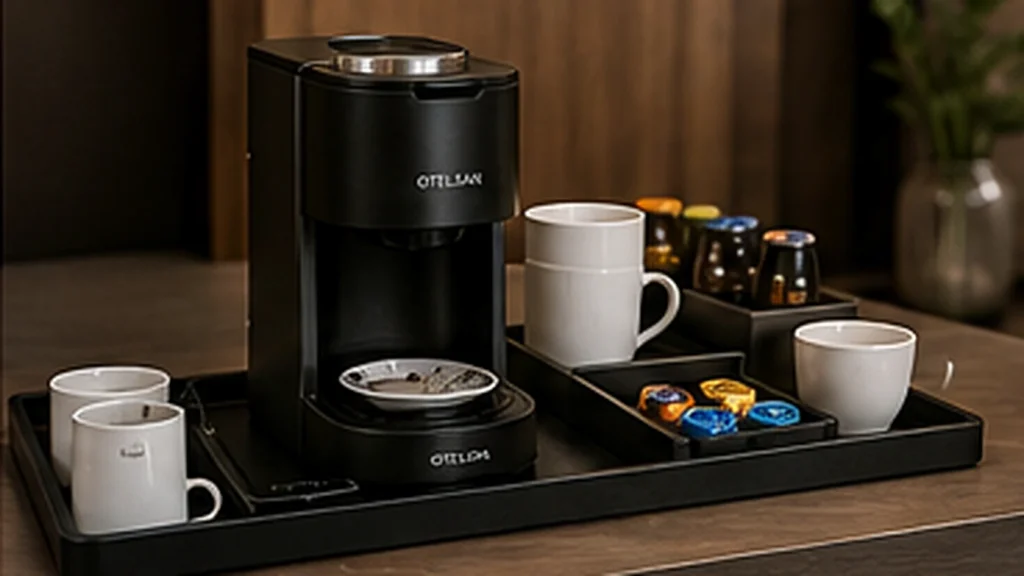
Cleaning and Descaling
Water quality affects scale build-up, while coffee oils and residue affect appearance and taste.
The hotel should follow the manufacturer’s cleaning and descaling process and set intervals based on actual use and water conditions.
Removable tanks and drip trays should be easy to wash and dry.
The correct solution should still look resolved after the guest has used it. Consider the product both in the pristine housekeeping reset position and in the normal working condition during a stay.
For procurement, require the exact model, dimensions, material or electrical data where relevant, included accessories and finish to be stated on the quotation. A generic family name is not enough for final comparison.
Ask housekeeping to repeat the service movement after the guest-use test. If a reset requires awkward lifting, several loose components or access behind other furniture, that burden will be repeated every day after opening.
Under-specification can be equally expensive. Missing a small mounting, clearance, storage or consumable detail can create repeated labour and inconsistent rooms even when the main product is good.
Consumable Storage and Presentation
Capsules, pods, sugar, stirrers and cups need an organised place.
The welcome tray or organiser should be sized for the approved daily par level.
Premium presentation should not make replenishment unnecessarily slow.
From a design perspective, the product should be reviewed with the neighbouring furniture, finishes and guest touchpoints rather than against a blank background. Small dimensional or visual conflicts become much more obvious once the full room composition is present.
When alternatives are offered, ask the supplier to identify the deviation clearly. Differences in size, mechanism, finish, power, accessories or warranty should not be left hidden inside descriptive text.
Engineering should also confirm that normal service or replacement can be completed without damaging finished furniture or wall surfaces. Replacement access is part of long-term project quality.
The specification should therefore define both the product and the condition in which the hotel expects it to operate.
Machine Footprint and Beverage Station Integration
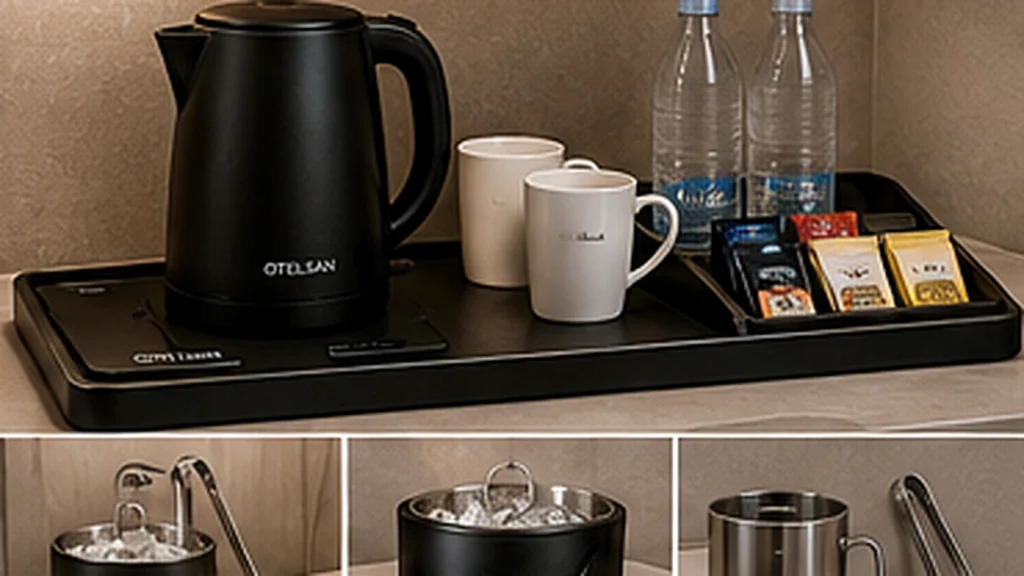
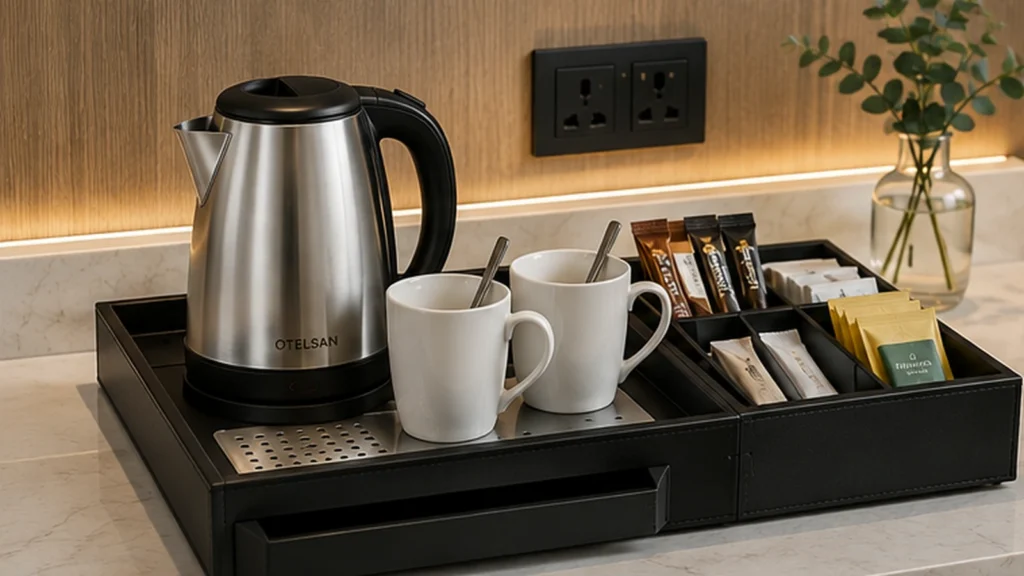
A coffee machine may share space with a kettle, water and glassware.
Measure the complete station, including lid or tank movement, cup placement and cable exit.
Where space is limited, separate the machine and kettle into adjacent zones rather than crowding one tray.
The room drawing should show the item in its real operating position, not only its storage position. Door movement, user reach, clear floor area and adjacent accessories can change the practical result even when the nominal dimensions appear correct.
Price should be compared only after confirming that the commercial scope is equivalent. Packaging, mounting parts, holders, power supplies or project-specific accessories can materially change the real delivered cost.
Record the final position and configuration with photographs and dimensions. This turns the approved sample into a practical site reference rather than a one-time meeting decision.
A common failure mode is to approve the product technically while leaving the room interface unresolved. The result is then corrected on site through drilling, spacers, extension leads, relocated accessories or inconsistent installer decisions.
Project Comparison Framework
The table below is a decision framework rather than a substitute for exact supplier data. The purpose is to keep the project team focused on the differences that materially affect guest use, installation and operations.
| Decision factor | Capsule machine | Pod machine | Ground-coffee machine |
|---|---|---|---|
| Guest operation | Very simple single-serve use. | Simple portioned use. | Can require more dosing and cleanup. |
| Consumable control | Strong portion consistency. | Good portion consistency. | More flexible but less controlled. |
| Cleaning | Capsule waste and drip tray. | Pod disposal and drip tray. | More coffee residue and dosing components. |
| Best fit | Guestrooms prioritising convenience. | Properties with compatible pod supply. | Suites/residences where flexibility is valued. |
Where two alternatives appear similar, compare the less visible details as well: attachment method, clear usable dimensions, service access, replacement parts, packaging and the way the product behaves after repeated use.
Room-Type Standardisation and Exceptions
Standardisation is valuable because it reduces the number of models the hotel needs to purchase, train staff on, stock as spares and replace after opening. A single well-selected reference can often serve several room types.
The objective is not to force identical equipment everywhere. Suites, accessible rooms, long-stay units or different furniture layouts may create legitimate exceptions. Those exceptions should be documented before quantities are calculated.
The room-type matrix should show model, quantity, finish, location and any configuration change. It should be treated as a controlled procurement document rather than an informal spreadsheet that changes without approval.
Where multiple suppliers or production batches are used, the same approved visual and functional benchmark should apply so guests do not encounter noticeably different solutions in otherwise equivalent rooms.
Operational Review: Housekeeping, Engineering and Guest Use
Design and procurement teams see the product only during parts of the project; housekeeping and engineering will work around it for years. Their feedback should be included before final approval.
Housekeeping should test access, cleaning, refill or reset movements and the time required to return the area to standard. Engineering should test removal, service access and replacement where relevant.
Guest use should be evaluated for reach, visibility, intuitive operation and the possibility of misuse. The best hospitality equipment usually requires very little explanation.
Operational feedback should be converted into specification changes while the project can still act on them, not left as a handover comment after purchasing is complete.
Technical Data, Drawings and Approval Records
For hotel coffee machine procurement, the project record should contain enough information to reproduce the approved result without relying on memory. Record the exact model, dimensions, finish, configuration, included accessories and any technical data that affects the room interface.
Supplier drawings should be checked against the final architectural and furniture information rather than filed without review. Where a dimension or fixing location affects another trade, mark that interface clearly and close it before production.
Version control matters when samples or specifications change. The project team should know which drawing, finish and model revision is current, which has been superseded and whether the change affects quantities already ordered.
At handover, retain the approved reference together with warranty and service information. This creates a reliable basis for future maintenance, refurbishment and replacement rather than forcing the hotel to reverse-engineer the original room years later.
Installation, Room Interfaces and Site Verification
Before installation, verify the site condition against the approved product. Furniture openings, finished floor levels, wall construction, sockets, cable routes and nearby accessories can all shift slightly between design and execution.
The installer should not be expected to resolve unresolved design decisions room by room. Provide a clear approved location, orientation, fixing method and any critical clearance. Where left/right or mirrored configurations exist, show them explicitly.
A first-off installation or pilot room is useful before the full rollout. Inspect the first completed units, correct any repeated issue and then release the standard to the remaining floors. This reduces the risk of multiplying the same small mistake across the property.
Site inspection should check both appearance and function. A product can be level and visually aligned while still being difficult to open, reach, remove, clean or service.
Lifecycle Cost, Maintenance and Replacement Planning
Purchase price is only one part of the equipment cost. Cleaning time, consumables, spare parts, failure rate, service access and the ease of replacing a damaged unit all influence the long-term operating cost.
For large quantities, small maintenance differences matter. A component that takes only one extra minute to clean or reset can create significant labour over years of hotel operation.
Standardised models and finishes can simplify spare stock and reduce the chance of visible mismatches after replacement. Where technology changes quickly, replaceable modules or loose-equipment solutions can be preferable to permanently integrating short-life electronics into expensive furniture.
The procurement decision should therefore consider expected service life and replacement route together. Premium project quality is not only how the room looks on opening day, but how consistently it can be maintained.
Packaging, Delivery and Installation Sequence
Guest room equipment is often delivered in large quantities but installed in small room-by-room batches. Packaging should protect the finish while allowing site teams to identify model, room type and quantity quickly.
Agree whether cartons are labelled by product, floor, room type or another project code. The best system depends on site logistics, but unclear packaging creates unnecessary opening, sorting and handling.
Coordinate delivery with room readiness. Sensitive finished products should not remain exposed on site for long periods, while late arrival can delay inspections and handover. The logistics plan should therefore connect production, shipping, customs, storage and final room distribution.
Any accessories or fixing components packed separately should be controlled so they do not disappear before installation. A complete-room product is only complete when every required component reaches the installer.
How to Compare Supplier Quotations
Commercial comparison begins only after technical scope is normalised. Record the exact model and configuration beside every price so the team can see whether proposals are genuinely equivalent.
Require the supplier to list included accessories, mounting components, power supplies, consumables where relevant, packaging, warranty and service support. Small omissions can materially affect the final delivered and installed cost.
Lead time should be evaluated against the project programme, including sample approval, production, inspection, shipping, customs and site distribution. A short manufacturing lead time alone does not guarantee an on-time room handover.
For visible products, finish consistency and replacement availability should be considered together. A low-cost product that cannot be matched later may create a patchwork appearance after the first maintenance cycle.
Project teams can review the OTELSAN product catalogue together with the project specification when comparing available product families.
Mock-Up Room and Sample Approval
The mock-up room is where the project should close the gap between product data and real use. Install or position the sample exactly as intended and use the final surrounding furniture, finishes and electrical points wherever possible.
Run the normal guest sequence from approach to use and return. Then repeat the sequence from the housekeeping perspective and, where relevant, from the engineering service perspective.
Do not approve only the front view. Check rear clearances, underside details, folded conditions, open-door positions, cable routes, mounting plates and any part the guest may not normally see but the installer or maintenance team must handle.
Record every approved variation by room type. If the sample is provisional or a prototype, state clearly which details remain subject to production confirmation.
Photographs should support a written approval record containing model, finish, dimensions, configuration, location and date. This becomes the benchmark for bulk production and room inspections.
Common Specification and Procurement Mistakes
Selecting before interfaces are frozen. The product is approved before furniture, wall, electrical or storage conditions are final, so site teams later improvise.
Comparing non-equivalent quotations. Different sizes, materials, accessories or functions are placed in one price table without normalising the technical scope.
Approving finish names instead of samples. Colour names do not guarantee identical tone, texture or gloss between suppliers or production batches.
Ignoring the housekeeping reset. A product looks good in the design review but requires unnecessary daily handling or creates inconsistent room presentation.
Leaving room-type exceptions undocumented. The total quantity may be correct while the distribution of models or configurations is wrong.
Relying on verbal approvals. Without a controlled model and finish record, procurement, supplier and site teams can work from different assumptions.
Adding features without an operating purpose. Extra functions increase cost or service complexity without improving the guest experience.
Forgetting replacement access. The original installation works, but later service requires damage to furniture, walls or surrounding finishes.
Ordering before sample closure. Bulk production begins while dimensional or finish questions remain open, making corrections expensive.
Treating packaging as an afterthought. Products arrive damaged, mixed between room types or difficult for the site team to distribute efficiently.
Practical Pre-Order Checklist
Before the purchase order is released, the project team should confirm the following points for every applicable room type and approved model:
- Exact machine
- Room types
- Quantity
- Capsule/pod/ground system
- Compatible consumables
- Water tank capacity
- Tank removal
- Warm-up time
- Brew time
- Cup sizes
- Cup clearance
- Drip tray
- Waste capsule container
- Controls
- Status indicators
- Automatic standby
- Auto shut-off
- Rated voltage
- Frequency
- Power
- Plug type
- Cable length
- Outlet location
- Machine footprint
- Top clearance
- Side/rear clearance
- Cleaning method
- Descaling procedure
- Water hardness strategy
- Consumable organiser
- Housekeeping reset
- Spare strategy
- Warranty
- Service support
- Sample approval
- Final quantity
- Delivery sequence
The checklist is a project-control framework. It should be supplemented by the hotel’s own technical standards, local regulatory requirements where applicable and the exact installation or operating instructions issued for the approved model.
Frequently Asked Questions
Are capsule coffee machines good for hotel rooms?
They are popular because they provide controlled single-serve operation and simple guest use. The hotel should also consider capsule supply, waste and long-term consumable cost.
For project use, confirm the final requirement against the exact room condition and supplier documentation rather than relying on a category-wide assumption.
How large should the water tank be?
Large enough for the intended room service standard without making the machine unnecessarily bulky. The refill method and station layout matter as much as litres.
For project use, confirm the final requirement against the exact room condition and supplier documentation rather than relying on a category-wide assumption.
Should a hotel room have both a coffee machine and a kettle?
It depends on the service concept. If both are provided, the beverage station needs enough space, electrical capacity and a clear housekeeping reset layout.
For project use, confirm the final requirement against the exact room condition and supplier documentation rather than relying on a category-wide assumption.
How often should a hotel coffee machine be descaled?
Intervals depend on water hardness, use and manufacturer guidance. The property should establish a maintenance schedule based on real operating conditions.
For project use, confirm the final requirement against the exact room condition and supplier documentation rather than relying on a category-wide assumption.
What cup clearance is needed?
It should accommodate the cups supplied by the hotel. Test espresso cups, standard mugs and any larger cup used in the room standard.
For project use, confirm the final requirement against the exact room condition and supplier documentation rather than relying on a category-wide assumption.
How should used capsules be handled?
The machine or station should provide a clear waste path, and housekeeping should empty it during the room reset. The exact process depends on the model.
For project use, confirm the final requirement against the exact room condition and supplier documentation rather than relying on a category-wide assumption.
Do coffee machines need automatic shut-off?
Automatic standby or shut-off can reduce unnecessary energy use and improve convenience. Verify how the selected model behaves.
For project use, confirm the final requirement against the exact room condition and supplier documentation rather than relying on a category-wide assumption.
What should be tested in the mock-up room?
Tank filling, capsule loading, cup clearance, cable route, brewing, waste removal, drip-tray cleaning and complete beverage-station reset.
For project use, confirm the final requirement against the exact room condition and supplier documentation rather than relying on a category-wide assumption.
Conclusion: Coordinate the Product with the Complete Guest Room
A premium hotel room is created through coordinated details rather than isolated products. The selected equipment should fit naturally into the guest journey, work with the surrounding furniture or building services and remain manageable for hotel operations.
Define the requirement first, compare suppliers on an equivalent technical basis, test the preferred solution in the mock-up room and document the final approved condition before bulk procurement.
That discipline reduces late site changes, improves room-to-room consistency and gives the hotel a clearer basis for future replacement and maintenance.
Project teams can review the Guestroom product groups and the complete Guestroom product range when coordinating this requirement with the wider room equipment package. Once room types and quantities are defined, teams can build a project quote list for project-based evaluation.
For hotel openings, renovations or multi-room equipment specifications requiring coordinated support, contact the OTELSAN project team with room types, quantities, destination and relevant project information.