QUICK OVERVIEW
Key Takeaways
- 1. Specify the kettle and welcome tray as one coordinated beverage station rather than as separate loose accessories.
- 2. Match kettle capacity, power and safety functions to the actual room service concept and destination electrical requirements.
- 3. Approve tray dimensions, cup layout, cable route and steam clearance inside the real guest room furniture.
- 4. Choose tray materials and finishes for both visual quality and repeated housekeeping cleaning.
- 5. Standardise the complete beverage-station reset sequence and document room-type variations before bulk procurement.
Why the Kettle and Welcome Tray Should Be Specified as One Guest Room System
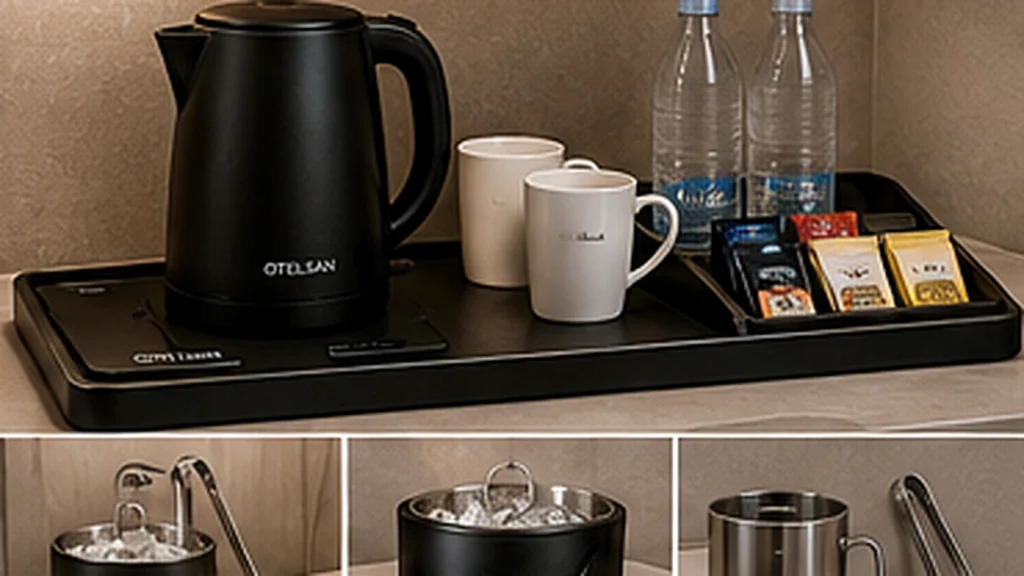
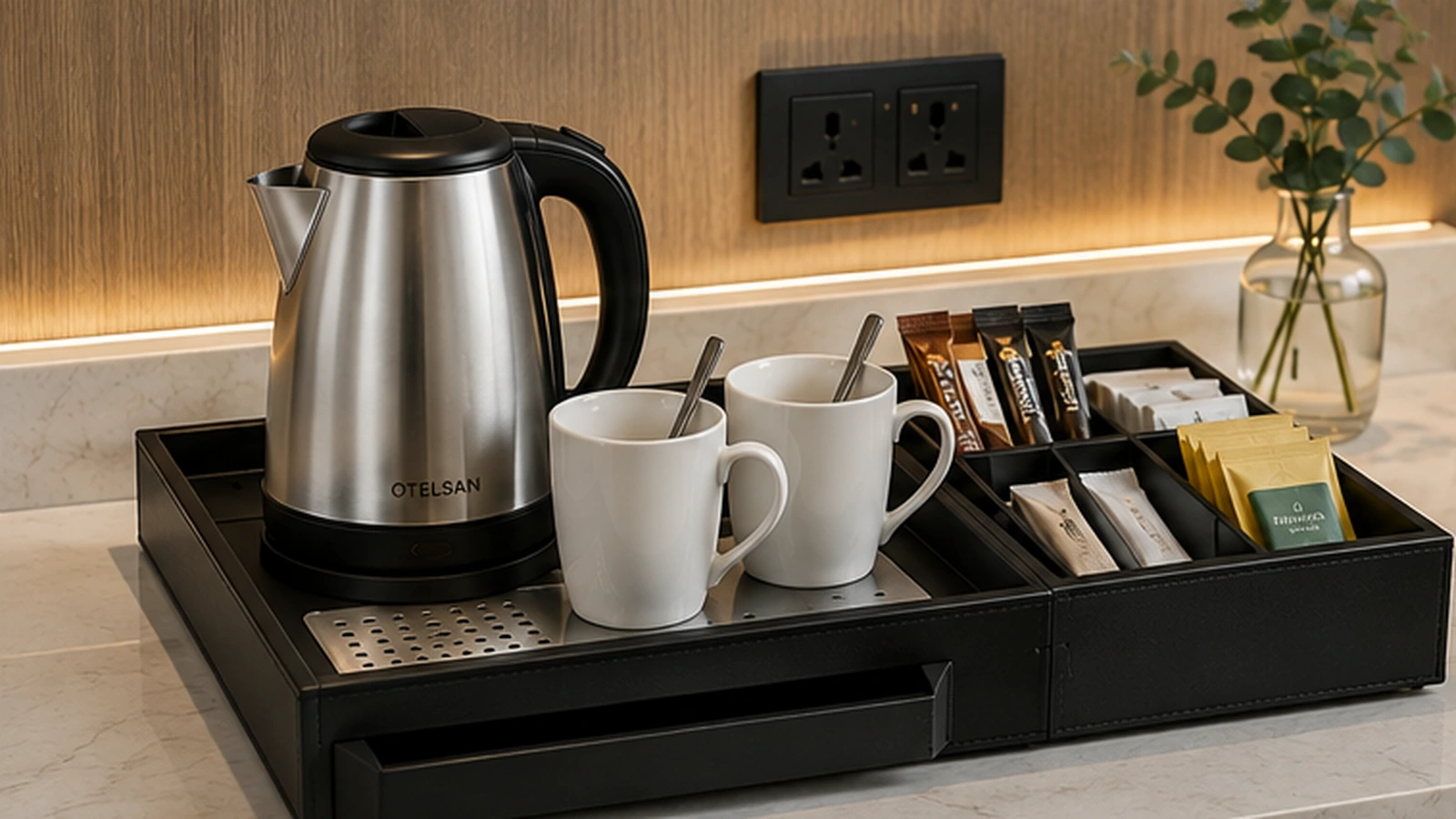
A hotel kettle and welcome tray are often purchased as simple loose accessories. In a professional guest room project, they should be treated as one coordinated beverage station. The kettle, tray, cups, glasses, sachets, spoons, bottled water and power connection all share the same surface, and the quality of that arrangement affects guest convenience, housekeeping speed, room presentation and electrical safety.
The decision is not only about choosing a kettle that boils water. Project teams need to understand where the station will sit, how much space is available, how housekeeping will replenish it, which materials are appropriate, how the cable will be managed, whether the kettle can be filled comfortably, how hot surfaces are separated from other items and whether the complete setup remains consistent across different room types.
A poorly coordinated beverage station can create small but repeated problems: kettles that do not fit on the tray, cables that cross the guest surface, cups that block the lid, sachets that become disorganised, water bottles that reduce working space, or units that are difficult to clean and reset. When these issues are repeated across hundreds of rooms, they become an operational problem rather than a minor design detail.
This guide explains how to specify hotel kettles and welcome tray sets for new hotels, renovations and room upgrades, with particular attention to capacity, materials, heating performance, safety functions, electrical requirements, tray layout, housekeeping, cleaning, limescale management, furniture coordination and procurement control.
Define the Beverage Station Requirement Before Selecting Products
The correct specification starts with the service concept. A limited-service city hotel may need a compact kettle, two cups and a simple sachet organiser. A luxury room may require a larger presentation tray, multiple beverage choices, bottled water and a more refined material finish. A serviced residence may need a different solution again.
Before asking suppliers for prices, define what the guest should find when entering the room and how the hotel intends to replenish it. The tray should then be sized around that operating standard rather than selected first.
A useful project brief should identify:
- room types and total quantities;
- number of guests expected per room type;
- required kettle capacity;
- preferred kettle body material and finish;
- automatic shut-off and boil-dry protection requirements;
- cordless or corded configuration;
- power rating, voltage, frequency and destination plug type;
- welcome tray dimensions and available furniture surface;
- number of cups, glasses, spoons and beverage portions;
- tea, coffee, sugar and accessory presentation method;
- bottled-water placement where applicable;
- tray material and finish;
- drip containment or removable insert requirement;
- housekeeping refill and reset sequence;
- cleaning and descaling procedure;
- room-type variations and standardisation strategy;
- sample-room approval procedure.
Kettle Capacity: Match Volume to the Real Guest Use
Hotel kettles are available in different capacities, but larger is not automatically better. The correct capacity should reflect the number of guests, the expected beverage use, the available tray area and the desired boiling time.
A compact kettle can work well in single or double rooms where the primary use is preparing one or two cups at a time. A larger kettle may be appropriate where rooms accommodate more guests or where the property expects heavier in-room beverage use.
Oversized kettles occupy more tray space, require more water when filled fully and may increase boiling time. They can also encourage guests to fill more water than needed, which creates unnecessary energy use.
The project should therefore compare capacity with real cup volume. If the room standard uses two medium cups, the kettle only needs enough practical capacity to serve the intended use comfortably. The exact volume should be confirmed against the project’s cup size and guest profile.
Kettle Body Materials: Stainless Steel, Plastic and Mixed Construction
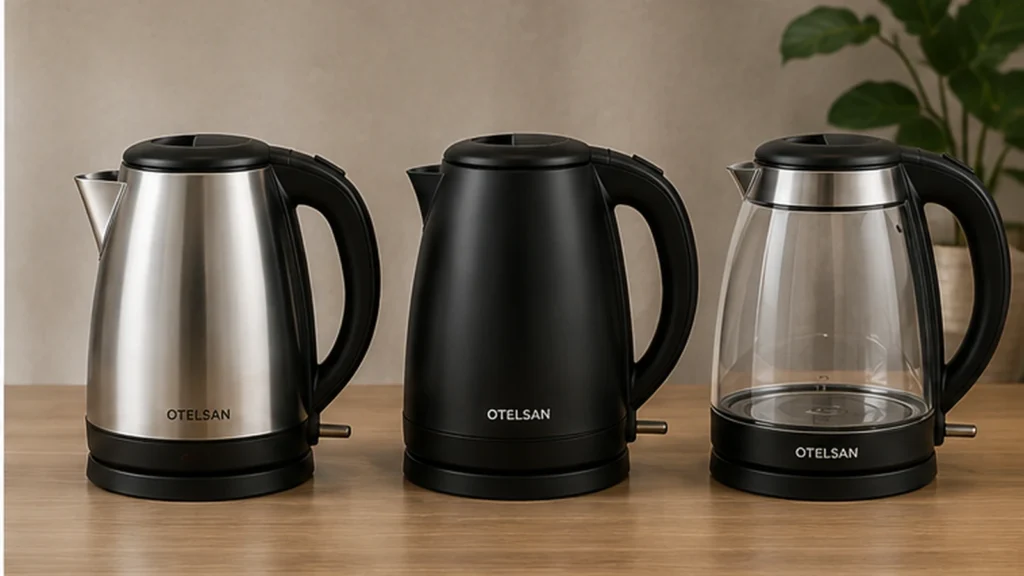
Kettle construction influences appearance, surface temperature, cleaning, weight and long-term presentation. There is no single material that is correct for every hotel.
| Material approach | Advantages | Points to review |
|---|---|---|
| Stainless steel body | Premium appearance, durable external finish, strong visual fit with many hospitality interiors. | External surfaces can become hot depending on construction; fingerprints and water marks may be visible. |
| Plastic body | Can be lightweight, easy to handle and less visually reflective. | Material quality, colour stability and long-term appearance should be reviewed carefully. |
| Mixed construction | Can combine metallic visual quality with insulated or polymer components where beneficial. | Check interfaces, seams, cleaning access and consistency of finishes. |
For stainless steel models, examine how the handle is insulated from the hot body and whether the guest’s hand can contact heated metal during normal use. A double-wall design can improve external-temperature control on some products, but the exact performance must be verified for the model being considered.
Plastic kettles should be assessed for rigidity, odour neutrality, internal water-contact quality and long-term appearance under repeated cleaning. A lightweight body can be convenient for guests, but the base and handle still need to feel stable.
Mixed-material kettles can offer a useful balance, particularly when metallic finishes are combined with cool-touch handles, lids or bases. The project should evaluate the complete product rather than assuming the body material alone determines quality.
Heating Performance and Power Rating
A hotel kettle should boil the required water volume within a reasonable time while operating safely on the room’s electrical system. Higher wattage can reduce boiling time, but it also increases instantaneous electrical demand. The correct rating depends on the destination market, room circuit design and project standard.
Do not select wattage without coordination with the electrical consultant or approved room power schedule. The room may already include minibar, coffee machine, charging devices, hair dryer or other equipment with significant electrical load.
Where multiple high-power appliances share a circuit, the project needs to confirm that the intended usage condition remains acceptable. This is especially important when the kettle and coffee machine are installed on the same beverage counter.
Suppliers should state rated voltage, frequency and power clearly. The exact destination plug should also be confirmed before production or shipment.
Automatic Shut-Off and Boil-Dry Protection
Automatic shut-off is a basic operational requirement for hotel kettles. The kettle should stop heating when the water reaches boiling point or the designed cut-off condition.
Boil-dry protection is equally important. If the kettle is switched on with insufficient water, the heating system should protect the appliance from continuing to operate in an unsafe condition. The exact protection method varies by product, so supplier documentation should be reviewed.
These functions should not be treated as marketing features. They are part of the project’s safety and reliability requirements. During sample approval, test the normal shut-off behaviour and confirm the operating instructions.
Where applicable, request relevant product conformity and safety documentation for the destination market. Regulatory requirements vary, so the project should not rely on a generic claim that one certification covers every country.
Cordless Kettles, Bases and Cable Management
Cordless kettles with a separate powered base are common in hotel guest rooms because the jug can be lifted and filled without carrying the cable. The base remains connected to the electrical outlet.
A 360-degree rotational base can improve usability because the kettle can be returned from different directions. This is particularly helpful when the station is compact or used by both left- and right-handed guests.
Cable management is part of the installation. Excess cable should not lie loose across the tray, hang over furniture edges or sit close to water containers. Many bases allow some cord storage underneath; the project should confirm how much cable remains visible in the approved setup.
The power outlet should be close enough that the kettle reaches without extension leads. The cable should not pass behind hot surfaces or create a trip or snag risk.
Lid Design, Filling and Pouring Ergonomics
The kettle needs to be easy to fill from the room’s intended water source. In some properties guests use bottled water; in others they fill from a bathroom or kitchenette tap. The lid opening and kettle height should support the actual use.
One-touch lids can be convenient, but the release mechanism should feel robust and easy to operate. Removable lids can provide a wide opening for cleaning, but they introduce a loose component that can be misplaced or incorrectly refitted.
The handle should provide a secure grip when the kettle is full. Check balance during pouring, particularly for larger-capacity models.
The spout should pour cleanly without excessive dripping. Water running down the body can reach the base, tray or furniture surface and create repeated cleaning work.
A visible water-level indicator can help guests avoid overfilling. If the indicator is located on only one side, confirm that it remains visible in the approved station orientation.
Concealed Heating Elements and Internal Cleaning
Many hospitality kettles use concealed heating elements beneath a stainless steel or similar internal base rather than an exposed coil. This creates a simpler internal surface for cleaning and can reduce areas where scale accumulates.
The project should review the internal water-contact surfaces and confirm that housekeeping can inspect and clean them without specialised tools.
Small openings, difficult lid access or complex internal geometry can make descaling slower. A kettle that is easy to wipe and rinse is more practical over hundreds of room-service cycles.
Limescale and Water Quality
Limescale is an operational issue, not only a product issue. The rate of scale formation depends strongly on local water hardness and the hotel’s water treatment.
Scale can affect appearance, boiling efficiency and guest perception. In markets with hard water, the hotel should establish a regular descaling procedure and select kettles that are easy to inspect and clean.
Where the product includes a removable scale filter, confirm how it is removed, cleaned and replaced. Housekeeping and engineering teams should understand whether filters are washable or consumable.
The project should avoid promising a fixed descaling interval without reference to local water conditions. The hotel should establish the interval during operations based on actual scale build-up and supplier guidance.
Welcome Tray Size and Furniture Coordination
The welcome tray creates the physical boundary of the beverage station. Its dimensions need to fit the furniture surface while leaving enough working room for the guest.
A tray that is too large can dominate a compact desk or minibar cabinet. A tray that is too small forces the kettle, cups and sachets into a crowded arrangement.
Measure the actual usable furniture surface, not only the nominal cabinet width. Allow for wall panels, lamps, sockets, mirrors, raised edges and other accessories.
The tray should remain stable and fully supported. Avoid layouts where part of the tray projects beyond the furniture edge.
If the tray sits on stone, glass or high-gloss furniture, consider the underside material and whether it could scratch or slide. Non-slip feet or protective pads may be appropriate depending on the product design.
Tray Materials and Finish Selection
Welcome trays can be manufactured from different materials including coated metal, wood or wood-based materials, moulded polymer, laminate, leather-effect finishes and mixed constructions. The best choice depends on the design language and operating requirements.
The finish should withstand water droplets, hot cups, repeated wiping and contact with sachets or beverage products. Decorative finishes that look premium but stain easily can create maintenance problems.
If leather-effect or wrapped surfaces are used, inspect seams, edges and corners for resistance to repeated cleaning. If wood-based trays are used, verify how exposed edges are protected from moisture.
Metal trays can provide a crisp, durable appearance but may show scratches or water marks depending on finish. Powder-coated or textured surfaces can behave differently from polished surfaces.
The final decision should balance visual quality with the housekeeping method actually used by the property.
Cup, Glass and Sachet Organisation
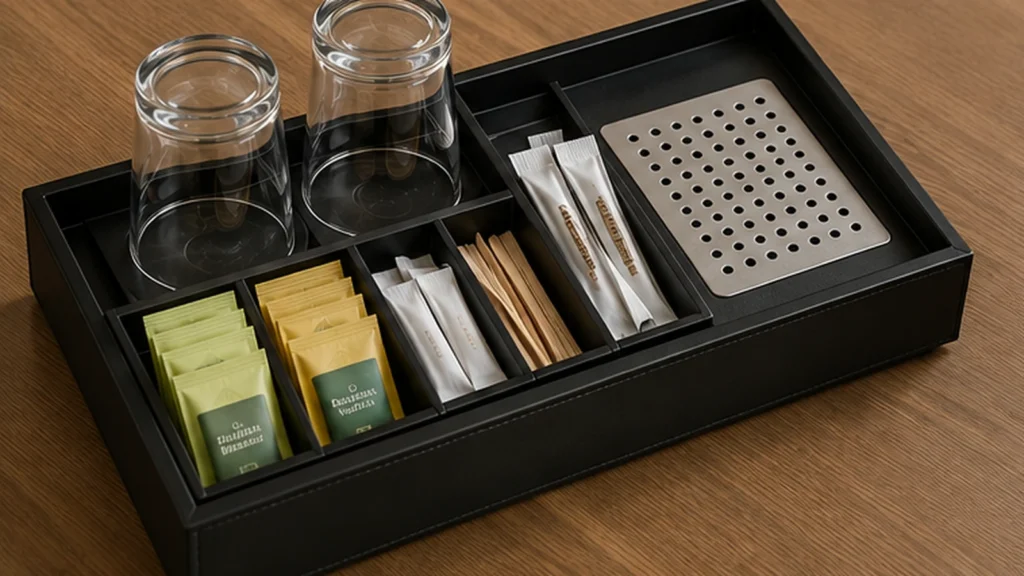
The tray should communicate the beverage offer immediately. Guests should not need to move several items to find tea, coffee or sugar.
Separate wet and dry functions where possible. The kettle and cups occupy the main preparation area, while sachets and stirrers can be grouped in an organiser.
The organiser should be sized for the standard refill quantity. Oversized compartments can look empty; undersized compartments force housekeeping to overfill or leave products loose.
If the station includes glasses and bottled water, confirm whether they belong on the same tray or in an adjacent area. Crowding everything onto one tray can make the arrangement less practical.
For properties offering several tea varieties or coffee types, consider whether the guest can identify choices without excessive packaging clutter.
Drip Management and Protection of Furniture
Water is unavoidable around a kettle station. Guests may overfill the kettle, pour imperfectly or return a wet kettle to the base. The tray should therefore help protect the furniture below.
Raised edges, removable drip inserts or water-resistant surfaces can help contain small spills. The exact solution depends on tray design.
The kettle base should sit on a stable, dry area. Cups and sachets should not be positioned where normal pouring drips directly onto them.
During mock-up approval, pour water as a guest would and observe where droplets land. A visually attractive layout may need adjustment once real use is simulated.
Housekeeping Refill and Reset Workflow
The welcome tray is handled every day. Housekeeping needs to check the kettle, remove used cups, replenish tea and coffee, replace bottled water where applicable, wipe the tray and reset every item to the approved presentation.
The layout should make missing items immediately visible. If every room uses the same arrangement, housekeeping can inspect the station quickly.
Small removable organisers can simplify cleaning if they lift out easily. However, too many loose components increase the risk of misplacement.
The hotel should document the standard refill quantity for each room type. This helps purchasing, inventory control and consistent guest presentation.
Where suites or higher room categories receive additional beverage options, the room-type matrix should show those differences clearly.
Cleaning and Hygiene Considerations
Kettles and welcome trays are guest-contact items and need a clear cleaning routine. The kettle exterior, handle, lid and base are frequently touched. The tray can collect dust, sugar granules, tea residue and water marks.
Cleaning products should be compatible with the selected materials. Abrasive chemicals can damage metallic, polymer or wrapped surfaces.
The kettle interior should be cleaned and descaled according to the supplier’s instructions and local operating conditions. Housekeeping should never immerse electrical bases or components unless the product is specifically designed for that method.
Cups and glasses should follow the property’s approved washing and hygiene process. The tray itself should not become a substitute storage location for unclean reusable items.
If disposable accessories are used, the hotel should also define how open or partially used items are handled between guests.
Electrical Outlet Position and Furniture Integration
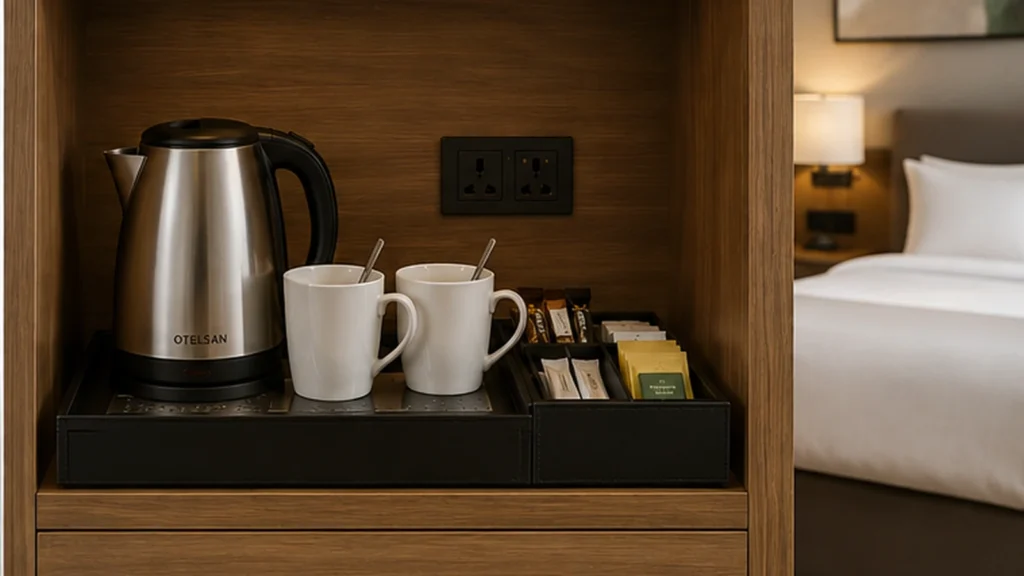
The socket should be close to the beverage station, accessible for maintenance and positioned away from likely spill paths.
A socket hidden behind the kettle can make disconnection difficult. A socket located too far away creates exposed cable. The best position allows the base to sit naturally while keeping the connection discreet.
If the furniture includes a recessed beverage niche, confirm that the kettle can be lifted vertically without hitting shelves. Steam should not discharge directly into sensitive finishes, electrical sockets or low cabinet panels.
The station needs enough vertical clearance for lid opening and filling. This is often missed when a shelf is added above the kettle during furniture design.
Steam exposure should be considered for surrounding laminates, wood veneers, mirrors and painted surfaces. Repeated steam can affect finishes even when the kettle itself operates correctly.
Kettle Placement and Guest Safety
The kettle should sit on a stable horizontal surface, away from the furniture edge. The guest should be able to lift and pour without pulling the cable or reaching across other hot or fragile items.
Do not position the kettle directly beneath easily damaged materials if steam has no route to escape.
The handle should remain accessible, and the kettle should not need to be rotated awkwardly before use.
Where children may occupy the room, the project team may choose to consider additional placement factors within the overall room safety strategy. The hotel’s own safety policy and local requirements should guide these decisions.
Room-Type Standardisation and Variations
Standardisation simplifies purchasing, housekeeping and replacement. Using the same kettle and tray across most guestrooms allows the hotel to keep fewer spare models and maintain a consistent reset procedure.
Variation should be introduced only where the service concept justifies it. Suites may receive a larger tray, more beverage choices or additional cups. Family rooms may need a different quantity. Serviced residences may combine the kettle with a coffee machine or kitchenette function.
Record these differences in a room-type matrix. The matrix should show kettle model, tray model, cup quantity, beverage portions and any additional accessories.
Avoid creating several visual variants simply because different furniture packages exist. If one standard set can work across multiple interiors, consistency usually benefits operations.
Coffee Machines and Kettles in the Same Beverage Station
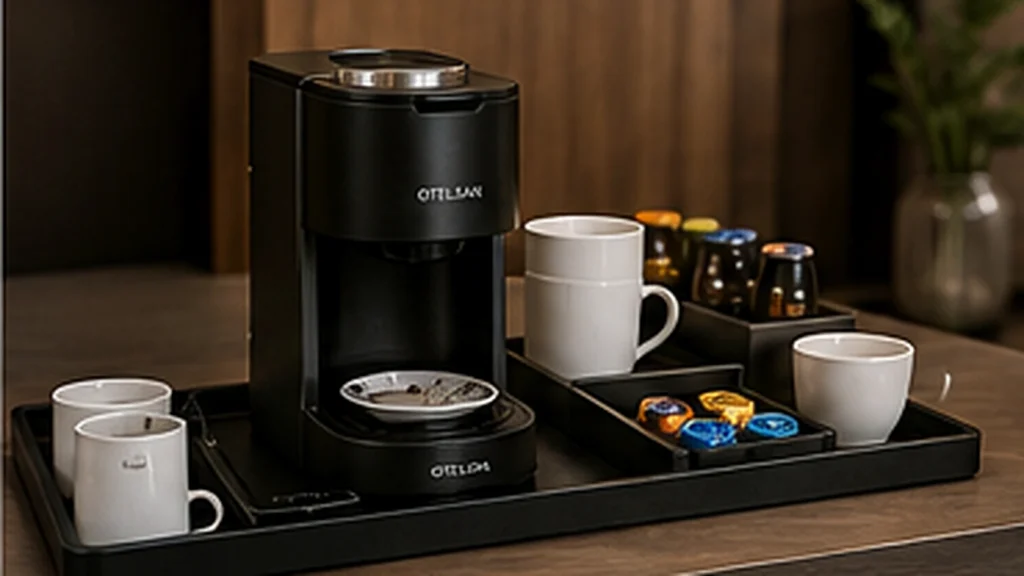
Some hotel concepts specify both a kettle and a coffee machine. This can improve guest choice but increases the space, electrical and housekeeping requirements of the station.
Confirm that both appliances can operate without cable overlap and that the furniture has suitable power capacity. The electrical design should consider the possibility that guests may switch on both appliances within a short period.
Water filling and waste management also become more important. Coffee capsules, pods or grounds need storage and disposal space.
The station should remain visually organised. If the furniture is too compact, separating the coffee machine and kettle into adjacent zones may work better than forcing both onto one tray.
How to Compare Kettle and Welcome Tray Quotations
A professional comparison should separate the kettle specification from the tray specification while still evaluating them as one final set.
For the kettle, compare:
- exact model reference;
- capacity;
- body material and finish;
- rated voltage, frequency and power;
- destination plug type;
- automatic shut-off;
- boil-dry protection;
- cordless base configuration;
- 360-degree rotation where applicable;
- cable length and cord storage;
- lid opening method;
- water-level indicator;
- concealed or exposed heating element;
- scale-filter arrangement where applicable;
- internal and external cleaning access;
- warranty and service support.
For the welcome tray, compare:
- external dimensions;
- usable layout area;
- material and surface finish;
- water and stain resistance;
- raised edges or spill-containment details;
- cup and glass positions;
- sachet organiser capacity;
- removable inserts or components;
- underside protection or anti-slip details;
- cleaning method;
- colour and finish consistency;
- packaging and project-labelling requirements.
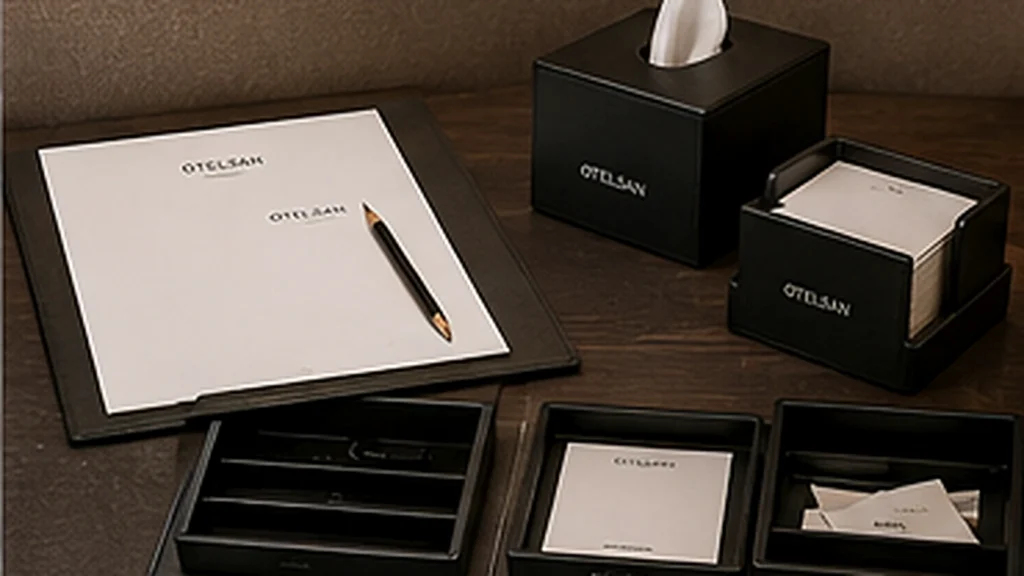
Project teams can review the OTELSAN product catalogue when comparing kettle, welcome tray and wider guest room equipment options against the project brief.
Mock-Up Room and Sample Approval
The kettle and tray should be approved in the actual furniture setting whenever possible. Place the complete station in the mock-up room with the intended cups, water, sachets and accessories.
Check the available work surface, cable route, socket location, kettle lid clearance, steam path and guest pouring movement.
Then review the station from the housekeeping perspective. Remove and replace every item, wipe the tray, refill the organiser and confirm that the approved layout can be reproduced quickly.
Test normal kettle operation, shut-off, base stability and pouring. The goal is to validate the complete use sequence rather than only the appearance.
Photograph the final approved arrangement and record the exact product references, quantities and layout so it can be repeated throughout the hotel.
Common Kettle and Welcome Tray Specification Mistakes
Choosing the kettle before defining the tray layout. The appliance may consume too much space once cups and beverage products are added.
Oversizing capacity. A larger kettle is not automatically better and can create unnecessary space and energy use.
Ignoring socket location. Poor cable routing can compromise both appearance and usability.
Leaving steam clearance unreviewed. Shelves, mirrors and furniture finishes can be exposed to repeated steam.
Approving a tray only by appearance. Water resistance, cleaning and reset speed are equally important.
Using too many loose organisers. Extra components can slow housekeeping and increase loss or misplacement.
Not testing the real cup and bottle sizes. Generic dimensions do not prove that the final presentation works.
Ignoring local water hardness. Descaling requirements can become a significant operating issue.
Mixing several kettle models without operational reason. This complicates spares, housekeeping and replacement.
Ordering before destination electrical details are confirmed. Voltage, frequency and plug type should be fixed before production.
Practical Pre-Order Kettle & Welcome Tray Checklist
Before releasing a hotel kettle and welcome tray order, confirm the following for each room type:
- Exact kettle model.
- Exact welcome tray model.
- Room types and quantity allocation.
- Kettle capacity.
- Kettle body material and finish.
- Rated voltage.
- Frequency.
- Power rating.
- Destination plug type.
- Automatic shut-off.
- Boil-dry protection.
- Cordless base requirement.
- 360-degree base where required.
- Cable length and cord-storage method.
- Water-level indicator.
- Lid opening method.
- Handle ergonomics.
- Pouring and drip behaviour.
- Heating-element configuration.
- Scale-filter arrangement where applicable.
- Internal cleaning access.
- Descaling procedure.
- Tray external dimensions.
- Usable furniture surface dimensions.
- Tray material and finish.
- Water and stain resistance.
- Spill-containment detail.
- Number of cups.
- Number of glasses.
- Tea/coffee/sugar quantities.
- Sachet organiser configuration.
- Bottled-water placement where applicable.
- Socket location.
- Steam clearance.
- Furniture protection.
- Housekeeping reset sequence.
- Cleaning procedure.
- Room-type variations.
- Sample-room approval status.
- Warranty and service arrangements.
- Packaging and project labelling.
- Final quantities and delivery sequence.
The final specification should remain aligned with the hotel’s electrical design, destination-market requirements, cleaning procedures and service concept. Product-specific supplier instructions remain essential for the approved equipment.
Frequently Asked Questions
What kettle capacity is best for a hotel room?
The right capacity depends on guest occupancy, cup size and expected beverage use. A compact kettle may be sufficient for many standard rooms, while larger rooms or suites may justify more volume. The project should match capacity to the actual service standard rather than choosing the largest available model.
Should a hotel kettle be stainless steel or plastic?
Both can be suitable. Stainless steel can provide a premium appearance and durability, while plastic can reduce weight and external heat transfer depending on design. The complete product should be assessed for handling, cleaning, surface temperature and long-term appearance.
What is boil-dry protection?
Boil-dry protection is designed to stop or limit heating when the kettle operates with insufficient water. The exact protection method varies by product, so the supplier’s technical documentation should be reviewed.
Why is automatic shut-off important in hotel kettles?
Automatic shut-off prevents the kettle from continuing to heat after reaching its designed boiling or cut-off condition. It supports safe and convenient guest use and should be confirmed as part of the product specification.
Should the kettle and welcome tray be purchased as a set?
They do not always need to come from the same manufacturer, but they should be specified and approved as one station. The kettle footprint, cups, sachets, water and available furniture surface need to work together.
How should a hotel manage kettle limescale?
The hotel should establish a descaling routine based on local water hardness, actual scale build-up and the kettle manufacturer’s guidance. Models that are easy to inspect and clean can reduce operational effort.
Where should the kettle socket be located?
The socket should be close enough for the kettle base to connect without extension leads or exposed cable, while remaining accessible for maintenance and away from normal spill paths. The exact location should be confirmed in the room mock-up.
Can a kettle be placed under a shelf?
Only when there is sufficient clearance for lid opening, filling and steam escape, and when the surrounding materials are suitable for the repeated heat and moisture exposure. The furniture design should be reviewed with the actual kettle.
What should be included on a hotel welcome tray?
The exact contents depend on the service concept, but commonly include the kettle, cups, glasses where required, tea, coffee, sugar or sweetener, spoons or stirrers and sometimes bottled water. The approved room standard should define exact quantities.
What should be tested in the mock-up room?
Test tray fit, kettle stability, cable routing, socket access, lid clearance, steam path, pouring, cup placement, sachet organisation, housekeeping reset, cleaning and the appearance of the fully stocked station.
Conclusion: Build a Beverage Station That Works for Guests and Operations
A successful hotel kettle and welcome tray set is defined by more than product appearance. Capacity, safety functions, electrical compatibility, tray dimensions, cable management, steam clearance, cleaning and housekeeping reset all influence the quality of the final guest experience.
Start with the service standard, define exactly what the station must contain and approve the complete arrangement in representative furniture. This reduces installation problems, creates a more consistent presentation and makes daily room servicing easier.
Project teams can review the Guestroom product groups and the complete Guestroom product range when coordinating kettle and welcome tray requirements with the broader Living & Beverage package. Once quantities and room types are defined, teams can build a project quote list for project-based evaluation.
For hotel openings, renovations or multi-room beverage-station specifications requiring coordinated support, contact the OTELSAN project team with room types, quantities, destination, furniture dimensions and the required service standard.