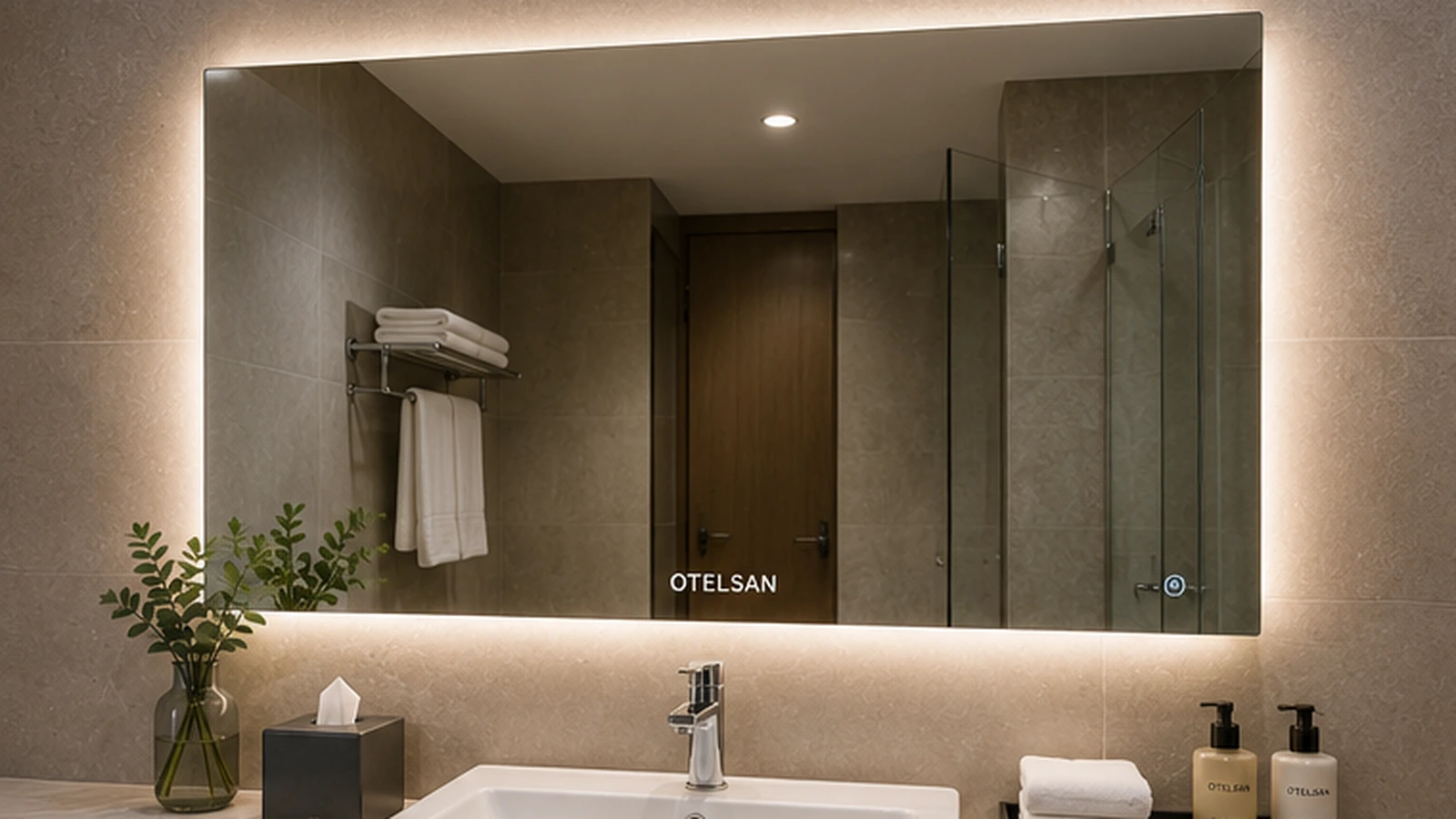
QUICK OVERVIEW
Key Takeaways
- 1. Define whether the mirror provides general reflection, task lighting, magnification or a combination before selecting size and finish.
- 2. Coordinate mirror dimensions, mounting height and swing-arm reach with the vanity, basin, lighting and guest-use position.
- 3. Evaluate illuminated mirrors by light distribution, colour temperature, colour rendering and glare—not brightness alone.
- 4. Freeze the exact mirror model before concealed electrical points and wall finishes are completed.
- 5. Approve mirrors in the real bathroom mock-up with surrounding lighting, finishes and guest-use movements included.
Why Hotel Bathroom Mirrors Need Project-Level Specification
A bathroom mirror is one of the most frequently used guest-facing elements in a hotel room. It supports grooming, shaving, make-up, contact-lens use and everyday personal preparation, while also influencing the visual scale, lighting quality and perceived finish of the bathroom.
Because mirrors appear visually simple, they are often specified late. That can create avoidable problems. An illuminated mirror may require electrical preparation that was not included in the wall. A magnifying mirror can be mounted at the wrong height. A swing-arm mirror can collide with a wall light or cabinet. A mirror with an attractive frame can be difficult to clean or unsuitable for a high-humidity environment.
For hotel projects, the mirror should therefore be treated as part of the complete vanity system. Mirror size, lighting, magnification, mounting, electrical supply, wall construction, guest reach, basin position, cleaning and replacement access all need to work together.
This guide explains how project teams can compare hotel bathroom mirrors across standard, illuminated and magnifying configurations, with particular attention to lighting quality, magnification level, mounting geometry, electrical coordination, moisture resistance, housekeeping, accessibility and procurement control.
Define the Mirror Requirement Before Selecting a Model
The first step is to define what the mirror is expected to do. A large wall mirror above a vanity serves a different purpose from a close-up magnifying mirror mounted on a swing arm. An illuminated mirror may provide task lighting, decorative lighting or both.
A project brief should identify the room types, mirror locations and functional expectations before quotations are requested. This avoids comparing products that look similar but perform different roles.
At minimum, define:
- room types and quantities;
- main vanity mirror or supplementary magnifying mirror;
- wall-mounted, recessed or furniture-integrated installation;
- overall mirror dimensions;
- round, square, rectangular or project-specific form;
- frame material and finish where applicable;
- integrated lighting requirement;
- lighting position and distribution;
- colour temperature target where specified;
- colour rendering requirement where specified;
- dimming or touch control where required;
- anti-fog or demister option where required;
- magnification level for close-up mirrors;
- single-sided or double-sided configuration;
- swing-arm or fixed mounting;
- available wall structure and mounting substrate;
- electrical supply and connection point;
- relationship with basin, vanity, lighting and wall accessories;
- housekeeping cleaning method;
- replacement and service access;
- mock-up room approval procedure.
Main Vanity Mirrors vs Magnifying Mirrors
The main vanity mirror provides the general reflection area for normal guest use. It is typically positioned above the basin or vanity and may be frameless, framed or integrated with lighting.
A magnifying mirror is a supplementary close-up tool. It can be wall-mounted on a swing arm, fixed to the wall or incorporated into a larger mirror system depending on the design.
The two should not be treated as substitutes. A magnifying mirror is valuable for detailed grooming, but it does not replace the normal perspective and field of view of the main mirror.
Where both are specified, their positions should be coordinated so that the magnifying mirror can extend into a comfortable use position without covering the main mirror, blocking lighting or colliding with the basin, shelf or wall accessories.
Standard, Illuminated and Magnifying Mirror Configurations
| Mirror type | Primary function | Project considerations |
|---|---|---|
| Standard vanity mirror | General reflection and visual extension of the bathroom. | Size, mounting height, edge treatment, frame, cleaning access and relationship with lighting. |
| Illuminated mirror | Reflection plus integrated task or decorative lighting. | Electrical supply, light distribution, colour temperature, controls, glare, service access and moisture suitability. |
| Magnifying mirror | Close-up grooming and precision use. | Magnification level, viewing distance, arm reach, mounting height, mirror diameter and guest ergonomics. |
| Illuminated magnifying mirror | Close-up reflection with local integrated light. | All magnifying-mirror considerations plus power supply, controls and light quality. |
Mirror Size and Proportion
The mirror should be proportioned to the vanity, basin and wall rather than selected from a standard size without reference to the room.
A very small mirror above a wide vanity can feel visually weak and may not provide enough useful reflection area. An oversized mirror can conflict with wall lights, shelves, shower screens or ceiling details.
The project should review mirror width against the vanity width and check the vertical relationship between basin, faucet, backsplash, lighting and ceiling.
For double-basin vanities, the team should decide whether one continuous mirror or two separate mirrors better suits the design and guest use.
Where mirrors extend close to the basin, splash exposure and cleaning frequency increase. The bottom edge should be positioned to balance visual proportion with practical maintenance.
Mounting Height and Guest Ergonomics
A mirror that is mounted correctly for one user can be uncomfortable for another. Hotel rooms serve guests of different heights, so the useful reflection area should accommodate a broad range rather than being centred around a single assumed eye level.
For main mirrors, overall height and bottom-edge position work together. A taller mirror usually provides more flexibility than a small mirror placed at a fixed eye level.
For magnifying mirrors, mounting height is more sensitive because the guest needs to bring the mirror close to the face. A swing arm can compensate for some variation, but the wall position still needs to allow natural use.
Accessible rooms may require different mirror positioning or tilt solutions depending on the project requirements. These should be coordinated with the accessibility consultant and applicable local standards.
Do not determine mounting height only from elevation drawings. Test the mirror in the mock-up room with the actual vanity height and basin projection.
Magnification Levels: 3×, 5×, 7× and Beyond
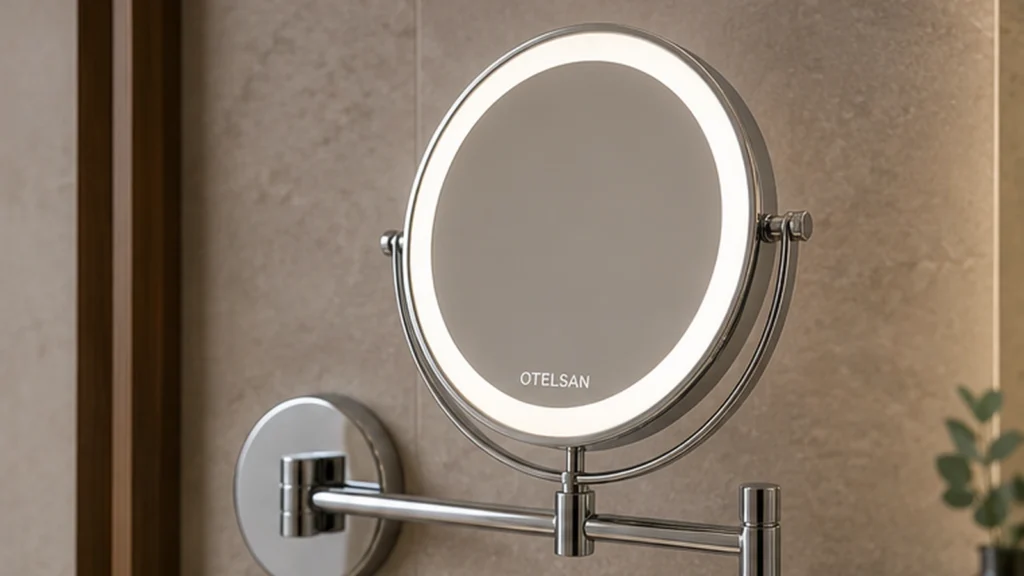
Magnification changes the viewing distance and field of view. Higher magnification is not automatically better. As magnification increases, the guest generally needs to move closer to the mirror and the usable field becomes smaller.
Moderate magnification can be easier for general grooming because it provides useful detail without making the viewing position too sensitive. Higher magnification may be preferred for precision tasks but can feel uncomfortable to some guests.
For hotel projects, select magnification according to the intended user experience rather than maximum specification.
If multiple magnification options are being considered, test physical samples. The difference between 3×, 5× and higher levels is easier to understand in person than from technical descriptions.
Double-sided mirrors may combine a normal 1× side with a magnified side, which can provide flexibility while keeping the product compact.
Swing Arms, Extension Reach and Mechanical Quality
Wall-mounted magnifying mirrors often use one or two articulated arms. The arm system determines how far the mirror can move from the wall, how stable it feels and whether it stays in the selected position.
The arm should extend far enough to bring the mirror to the guest rather than forcing the guest to lean across the vanity. At the same time, it should fold back neatly when not in use.
Check the maximum extension, folded depth, pivot resistance and mirror rotation. Excessively loose joints can cause the mirror to drift; excessively stiff joints can feel difficult to operate.
The mounting plate and wall fixings must support repeated movement. The project should identify the wall substrate and any reinforcement required before finishes are completed.
Arm geometry should also be checked against wall lights, towel rails, shelves and the main mirror.
Illuminated Mirrors: Task Light vs Decorative Light
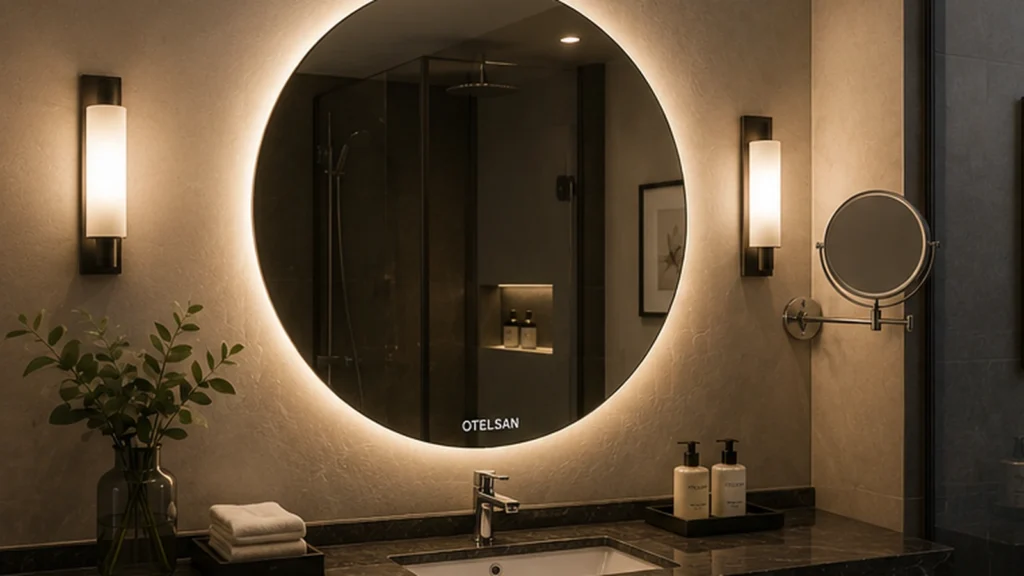
Integrated mirror lighting can serve two different purposes. Decorative light creates atmosphere and visual interest. Task light is intended to illuminate the face for grooming.
A backlit mirror can create an elegant halo effect but may not provide the same facial illumination as light directed toward the user. Edge-lit or front-lit designs can provide stronger task lighting depending on the optical system.
The project should therefore define whether the integrated light is expected to replace other vanity lighting or simply complement it.
If the mirror is the primary task light, the team should evaluate face illumination, shadowing, glare and light distribution in the mock-up room.
Avoid assuming that a bright-looking mirror automatically produces good grooming light. The direction and diffusion of light matter as much as total output.
Colour Temperature and Bathroom Atmosphere
Colour temperature affects the visual warmth or coolness of the light. Warmer light can support a relaxed hospitality atmosphere, while cooler light can feel crisper and more task-oriented.
The mirror light should coordinate with the bathroom’s ceiling, wall and decorative lighting. Mixing significantly different colour temperatures in the same small bathroom can create an inconsistent appearance.
If the project specifies a particular colour temperature, record it clearly in the procurement schedule and confirm the tolerance offered by the supplier.
Where selectable colour temperature is offered, consider whether the feature adds real value or simply adds operating complexity. A fixed, well-coordinated lighting scheme may be more consistent across the property.
Colour Rendering and Accurate Facial Appearance
Colour rendering describes how naturally colours appear under a light source. In a bathroom mirror, this can affect skin tone, make-up and grooming perception.
Where the mirror provides meaningful task lighting, colour rendering can be more important than in purely decorative lighting.
If the project has a defined lighting standard, the integrated mirror light should be coordinated with that standard. Supplier data should be reviewed for the exact model rather than relying on generic statements such as ‘natural light’.
A mock-up is useful because the perceived result depends on wall finishes, mirror position and the other lights operating in the room.
Glare, Diffusion and Light Distribution
A mirror can appear visually impressive in a showroom but create uncomfortable glare when viewed at close range. The diffuser, LED position and mirror geometry influence the result.
Guests should be able to look directly into the mirror without seeing harsh LED points or intense reflections.
Light should also reach both sides of the face reasonably evenly where the mirror is intended for task use. Strong light from only one direction can create shadows.
Inspect the mirror at different viewing distances and with the surrounding bathroom lights on and off.
For magnifying mirrors, glare control is particularly important because the user is closer to the light source.
Controls: Touch, Sensor, Switch and Dimming
Illuminated mirrors may use touch controls, proximity sensors, wall switches or integrated mechanical switches.
The control method should be intuitive and should fit the hotel’s room-management strategy. If the mirror light is connected to the general bathroom lighting circuit, a separate touch switch may be unnecessary. If it operates independently, the guest should understand how to turn it on.
Touch controls need to remain responsive in a humid environment and after repeated cleaning. Sensor controls should not activate unexpectedly when the guest moves nearby.
Dimming can provide flexibility, but the project should confirm whether the guest needs it and how the dimming state behaves after power interruption.
The more complex the control system, the more important service access and handover documentation become.
Anti-Fog and Demister Functions
Some illuminated mirrors include an anti-fog or demister heating pad behind part of the mirror surface. Its purpose is to reduce condensation on the heated area after showers.
The project should understand the actual demisted area, power consumption, activation method and whether the function operates automatically or through a separate control.
A demister does not necessarily keep the entire mirror clear. The heated zone may be smaller than the overall mirror.
If anti-fog is required, confirm how it is controlled and whether it should operate with the mirror light, bathroom light or separate switch.
This feature adds electrical load and service components, so it should be specified only where it supports the project requirement rather than being included automatically.
Electrical Coordination and Bathroom Safety
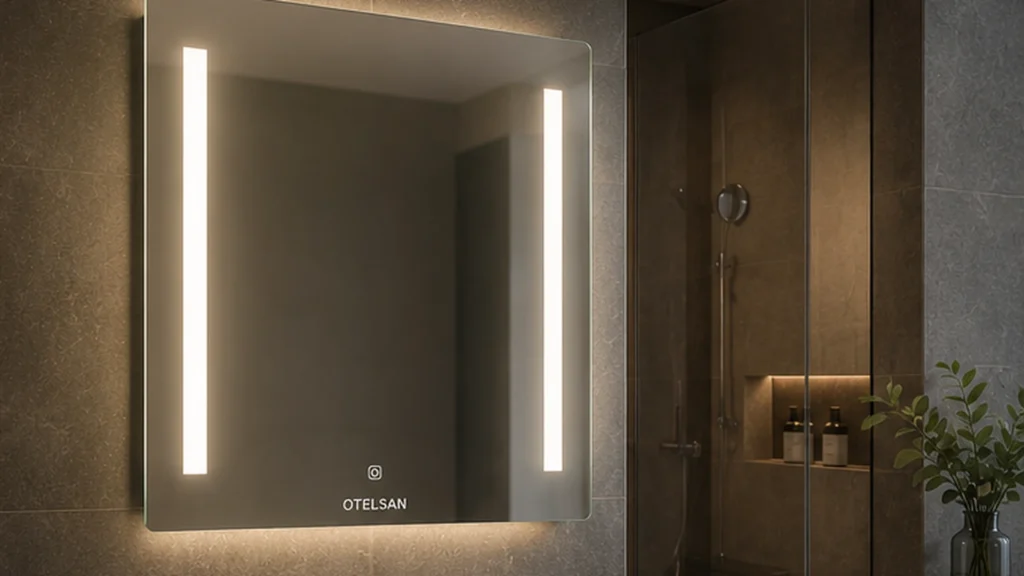
Illuminated and heated mirrors require electrical coordination. The exact connection method, protection requirements and permitted bathroom location depend on the product and destination regulations.
The project electrical consultant should confirm the connection point, circuit protection and installation zone before wall finishes are completed.
Concealed wiring needs to align with the mirror’s actual cable-entry or junction position. A connection point that is only a few centimetres out of position can become visible or require site alteration.
If the mirror uses a plug and socket rather than hard wiring, the socket location should remain accessible while complying with bathroom requirements.
Moisture Resistance and Bathroom Environment
Bathrooms expose mirrors and their fittings to humidity, condensation and cleaning chemicals. Frames, brackets, fasteners and electronic components need to be suitable for the intended environment.
The project should review the manufacturer’s declared suitability and any relevant protection rating for illuminated or electrical mirror products.
Metal finishes should be assessed for corrosion resistance, especially around joints, pivots and wall plates.
Wood-effect or coated frames should be evaluated for edge protection and resistance to repeated moisture exposure.
Do not assume every decorative mirror intended for residential interiors is appropriate for intensive hotel bathroom use.
Mirror Glass Quality, Distortion and Edge Finish
The reflective surface should provide a clear image without visible distortion under normal viewing conditions.
Large mirrors can reveal waviness or optical distortion more easily, especially when mounted on an uneven wall. The substrate and installation method therefore influence the final appearance.
Edge treatment can be polished, bevelled, framed or concealed depending on the design. Exposed edges should be finished safely and consistently.
For magnifying mirrors, optical quality is especially important. Poor-quality magnification can distort the image and reduce guest comfort.
Samples should be checked under the actual bathroom lighting because defects and distortion may be more visible once installed.
Frame Materials and Finish Coordination
Frames can connect the mirror visually with taps, handles, towel rails, shower profiles and other bathroom hardware.
Common approaches include chrome, brushed metal, black, brass-tone, painted metal and frameless construction.
Colour naming alone is not enough. Two suppliers may both describe a finish as brushed brass or matte black while the actual tone and texture differ.
Where finish coordination is important, compare physical samples under the bathroom lighting.
The project should also consider cleaning. Highly polished frames can show fingerprints and water marks more readily, while textured finishes may be more forgiving but can trap residue depending on surface quality.
Mounting Substrate and Wall Reinforcement
Mirror mounting should be coordinated with the actual wall construction. Tile over masonry, stone cladding, plasterboard, timber backing and furniture panels all require different fixing strategies.
Heavy mirrors, large illuminated mirrors and swing-arm magnifying mirrors can require reinforcement behind the finish.
The mounting points should be known before drilling finished tile or stone. Site improvisation increases the risk of cracked finishes, weak fixing or misalignment.
For recessed or flush installations, tolerances are even more important because the wall opening must match the product dimensions.
Installation drawings should show fixing points, cable entry and required clearances.
Relationship with Basin, Faucet and Backsplash
The mirror sits directly above one of the wettest working areas in the bathroom. Basin depth, faucet height and backsplash design influence the bottom-edge position.
A tall faucet can visually or physically interfere with a low mirror. A mirror mounted too high can reduce usability for shorter guests.
Splash patterns also matter. If the mirror extends close to the basin, housekeeping may need to clean water marks more frequently.
The vanity mock-up should be reviewed as a complete composition rather than as independent basin, faucet and mirror selections.
Magnifying Mirror Position Relative to the Main Mirror
A magnifying mirror should be close enough to the main grooming area that the guest understands its purpose, but it should not obstruct the primary mirror.
Mounting it too far to the side can make the swing arm difficult to reach. Mounting it too close to the centre can create visual clutter.
The arm should extend toward a comfortable standing position without crossing the basin unnecessarily.
Where wall lights are located beside the main mirror, check whether the magnifying mirror arm passes in front of them.
A left-side or right-side mounting decision may vary between mirrored room layouts, so the room-type matrix should document the final position.
Housekeeping Cleaning and Daily Appearance
Mirrors reveal water marks, fingerprints, dust and cleaning residue immediately. A mirror that cannot be cleaned efficiently will quickly reduce the perceived quality of the bathroom.
Housekeeping should have access to the full surface without having to dismantle accessories.
For swing-arm mirrors, staff need to clean the mirror face, rear housing, arm joints and mounting plate.
For illuminated mirrors, cleaning products should not damage diffusers, touch sensors or frame finishes.
The hotel should use cleaning methods compatible with the supplier’s instructions. Abrasive products can damage coatings, edges and optical surfaces.
The final housekeeping reset should return movable mirrors to a consistent folded or resting position.
Serviceability and Replacement
Integrated lighting, drivers, switches, sensors and demister pads introduce service components that standard mirrors do not have.
The project should understand whether these components can be replaced separately or whether the complete mirror must be changed.
For larger hotel quantities, spare components or spare complete units may reduce room downtime.
Wall-mounted magnifying mirrors should be replaceable without changing the entire wall finish. Standardised mounting patterns can be valuable if the same product is used throughout the hotel.
Handover documentation should record exact model, finish, electrical data and control configuration.
Standardisation Across Room Types
Using the same main mirror and magnifying mirror system across most guestrooms simplifies procurement, installation, housekeeping and replacement.
Different room types may still justify different sizes or layouts. Suites may have larger vanities, accessible rooms may require different positioning, and twin-basin bathrooms may need a different mirror arrangement.
Where the same functional product can be retained, varying only mirror size can be simpler than introducing completely different control systems and finishes.
Document every variation in the room-type matrix so site teams know which mirror belongs in each bathroom.
How to Compare Hotel Bathroom Mirror Quotations
A technical comparison should identify the exact mirror configuration rather than comparing price per piece.
For each quotation, record:
- exact model reference;
- overall dimensions;
- mirror shape;
- mirror-glass thickness where relevant;
- frame material and finish;
- standard or illuminated configuration;
- lighting position and type;
- rated power where applicable;
- voltage and frequency;
- colour temperature;
- colour rendering data where specified;
- dimming capability where applicable;
- touch, sensor or wall-switch control;
- anti-fog/demister function where applicable;
- demister area and power where relevant;
- magnification level;
- single-sided or double-sided construction;
- mirror diameter for magnifying mirrors;
- arm extension and folded depth;
- mounting plate dimensions;
- mounting method and fixing requirements;
- electrical connection position;
- declared moisture/protection data where applicable;
- serviceability of driver, LED or controls;
- warranty terms;
- spare-parts support;
- sample availability;
- delivery lead time;
- packaging and project-labelling requirements.
Project teams can review the OTELSAN product catalogue when comparing bathroom mirrors and other guest room bathroom equipment against the project specification.
Mock-Up Room and Sample Approval
Bathroom mirrors should be approved in the actual vanity setting whenever possible. A loose sample on a meeting-room wall does not show the real relationship with basin, faucet, lighting, tile joints and guest reach.
For illuminated mirrors, test the lighting with the bathroom’s other light sources. Review facial illumination, glare, colour appearance and control behaviour.
For magnifying mirrors, extend the arm fully and test the viewing position with different users. Confirm that the mirror stays in place and folds back neatly.
Check mounting height, electrical connection, clearances and cleaning access.
If anti-fog is included, test the demisted area and activation method under representative bathroom use where practical.
Common Hotel Bathroom Mirror Specification Mistakes
Choosing size without checking the vanity elevation. Mirror proportion should respond to basin, faucet, lighting and wall dimensions.
Using high magnification by default. Higher magnification reduces comfortable viewing distance and field of view.
Mounting a magnifying mirror for visual symmetry rather than reach. Guest ergonomics should control the position.
Assuming backlighting is sufficient task lighting. Decorative glow and facial illumination are not the same.
Mixing uncoordinated colour temperatures. Mirror light should work with the bathroom’s other lighting.
Freezing electrical points before the mirror model. Cable-entry and control positions vary.
Ignoring wall reinforcement. Large mirrors and swing-arm products need suitable fixing substrates.
Approving finish names without samples. Matte black, chrome and brass tones can vary significantly between suppliers.
Forgetting cleaning access. Arms, frames and sensors need regular housekeeping attention.
Adding anti-fog without defining the control logic. The function should have a clear operating and service strategy.
Practical Pre-Order Hotel Bathroom Mirror Checklist
Before releasing a hotel bathroom mirror order, confirm the following for each room type:
- Exact mirror model.
- Room types and quantity allocation.
- Main vanity or magnifying mirror function.
- Overall dimensions.
- Mirror shape.
- Framed or frameless configuration.
- Frame material and finish.
- Mounting height.
- Relationship with basin and faucet.
- Relationship with wall lighting.
- Wall substrate and reinforcement.
- Fixing method.
- Electrical or non-electrical configuration.
- Rated voltage.
- Frequency.
- Power consumption where applicable.
- Electrical connection position.
- Lighting type and position.
- Colour temperature.
- Colour rendering requirement where specified.
- Glare and diffuser quality.
- Touch, sensor, wall-switch or other control.
- Dimming where required.
- Anti-fog/demister requirement.
- Demister control logic.
- Magnification level.
- Normal 1× side where applicable.
- Mirror diameter for magnifying models.
- Swing-arm extension.
- Folded depth.
- Joint stability.
- Guest reach.
- Accessible-room requirements where applicable.
- Moisture/environment suitability.
- Edge finish.
- Cleaning method.
- Housekeeping reset position.
- LED/driver/control service access.
- Replacement method.
- Warranty.
- Spare-parts support.
- Sample-room approval status.
- Approved installation drawing.
- Final quantities and delivery sequence.
The final specification should remain aligned with the property’s bathroom design, electrical plan, accessibility strategy, cleaning procedures and destination-market requirements. Product-specific installation instructions remain controlling for the approved mirror.
Frequently Asked Questions
What type of mirror is best for a hotel bathroom?
The best mirror depends on the bathroom design and guest-use requirement. A standard vanity mirror may be sufficient in some properties, while others benefit from integrated lighting or a separate magnifying mirror. The correct solution should be selected as part of the vanity and lighting system.
What magnification is best for a hotel magnifying mirror?
There is no universal best level. Moderate magnification is often easier for general grooming, while higher magnification is useful for precision tasks but requires a closer viewing distance. Physical sample testing is recommended before bulk approval.
Is a backlit mirror good for make-up and grooming?
Backlighting can create attractive ambient light, but it does not always provide strong facial task lighting. If grooming illumination is important, evaluate the actual light distribution and consider front or edge lighting as appropriate.
What colour temperature should a hotel bathroom mirror use?
The mirror should coordinate with the bathroom’s overall lighting concept. The correct colour temperature depends on the interior design and project lighting standard. Consistency between mirror lighting and surrounding fixtures is usually more important than selecting one universal value.
Should a hotel mirror have anti-fog?
Anti-fog can improve convenience in bathrooms with frequent condensation, but it adds electrical load and service components. The project should define the demisted area, activation method and operating requirement before specifying the feature.
Where should a magnifying mirror be mounted?
It should be reachable from the normal grooming position, extend close enough to the guest’s face and fold away without colliding with lighting, shelves or the main mirror. Final height and side position should be tested in the mock-up bathroom.
Do illuminated mirrors need special electrical planning?
Yes. Power supply, connection point, bathroom-zone requirements, controls and service access should be coordinated with the electrical design before wall finishes are completed.
How should hotel mirrors be cleaned?
Use methods and cleaning products compatible with the mirror glass, frame, lighting diffuser, sensors and coatings. Abrasive products can damage finishes and optical surfaces. Housekeeping procedures should follow the supplier’s guidance.
What should be checked in a bathroom mirror sample room?
Check dimensions, mounting height, reflection area, vanity relationship, lighting quality, glare, colour appearance, controls, magnification, arm reach, electrical connection, cleaning access and replacement strategy.
Can one mirror model be used across the whole hotel?
Often yes, and standardisation can simplify procurement and maintenance. However, vanity width, accessible-room requirements, suite layouts and twin-basin arrangements may require different sizes or positions. Document the variations in the room-type matrix.
Conclusion: Specify the Mirror as Part of the Complete Bathroom
A hotel bathroom mirror is simultaneously a functional grooming tool, a lighting element, a visual design feature and, in many cases, an electrical product. Its success depends on how well these roles are coordinated.
Start by defining the mirror’s function, then coordinate size, lighting, magnification, mounting, electrical connection and cleaning requirements with the actual vanity design. Test the final combination in a representative bathroom before bulk procurement.
Project teams can review the Guestroom product groups and the complete Guestroom product range when coordinating mirrors with hair dryers, bins and wider bathroom equipment. Once room types and quantities are defined, teams can build a project quote list for project-based evaluation.
For hotel openings, renovations or multi-room bathroom-equipment specifications requiring coordinated support, contact the OTELSAN project team with room types, quantities, destination, vanity drawings and the required mirror configuration.